Grain Is Not Quality: When Beautiful Briar Misleads, and When It Truly Says Something
Beautiful grain is easy to trust. In photographs it can look like proof of value, as though the regularity or drama of the pattern already guarantees a better pipe. In reality, the matter is more complicated. Grain can tell you something about the block of briar, the way the pipe was oriented, and the visual value of the finished object, but by itself it cannot confirm precise drilling, a comfortable stem, sensible balance, or a calm smoke. That is why it helps to learn what grain really says, and where it stops being a reliable sign of quality.
Why grain so easily captures the eye
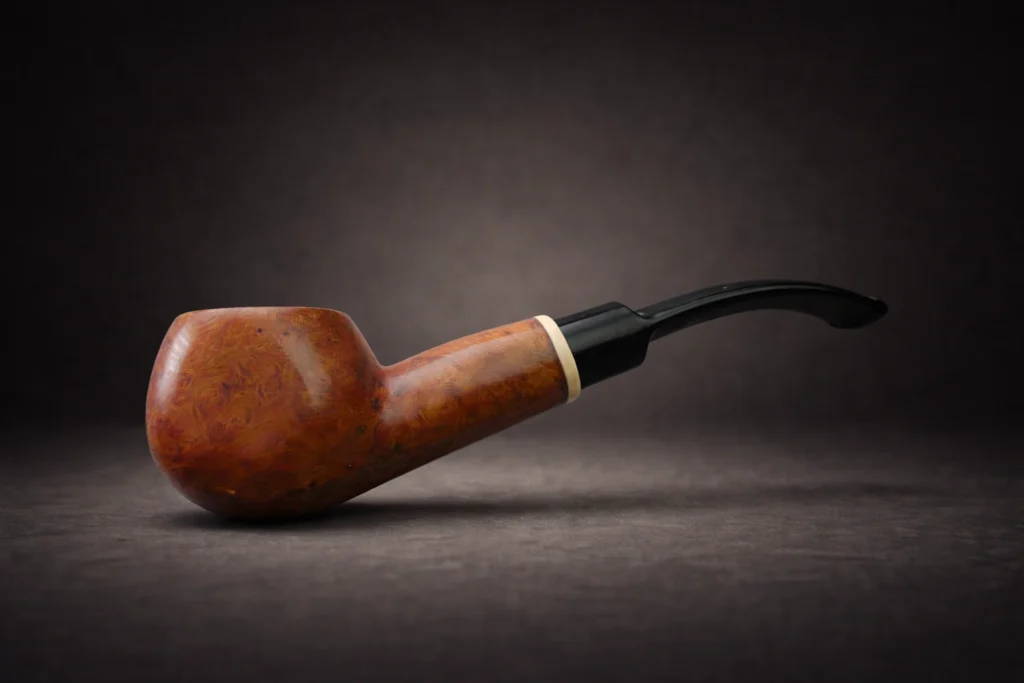
In pipes, grain has an almost magnetic power. Even someone who knows very little about briar quickly senses that straight grain, dense patterns, or flaming movement across the surface feel special. That is easy to understand. Grain is visible, immediate, and highly photogenic. It creates a first reaction before the eye has even begun to think about the chamber, the stem, or the balance.
There is nothing wrong with that. Beauty is a real part of the experience. A beautiful pipe is not something to apologize for. The trouble begins only when beautiful grain is treated as complete proof of quality. At that point, the eye takes over a job that should be shared with judgment. And with pipes, that division matters. What attracts the eye is not always what delivers long-term satisfaction in actual use.
What grain can genuinely tell you
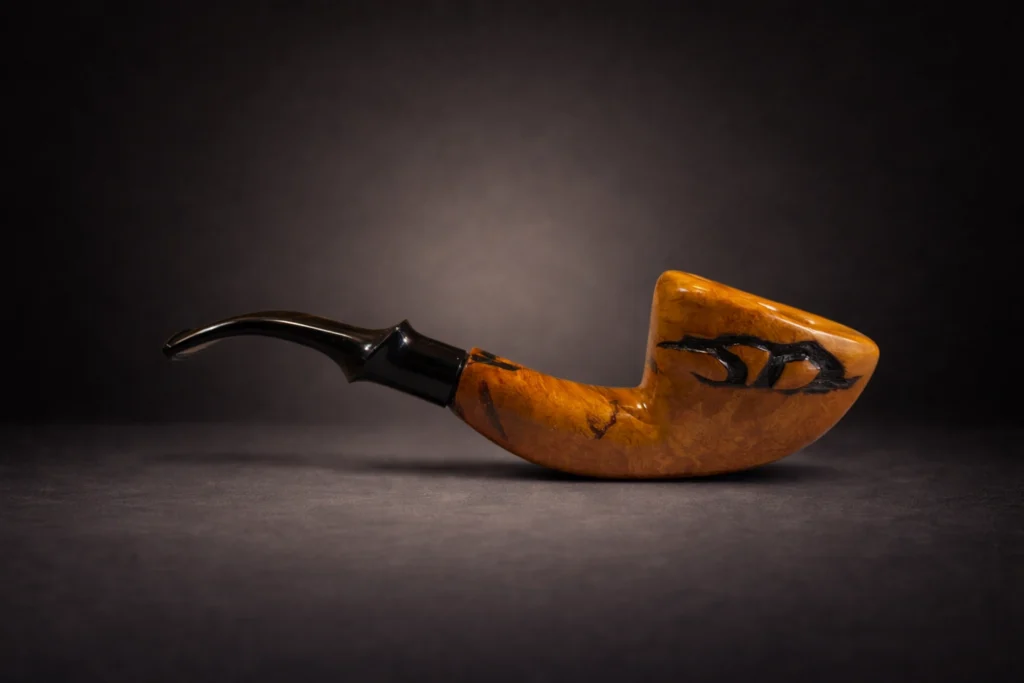
Grain is not a worthless ornament. It does tell you something. It can reveal how the block of briar was oriented, how carefully the maker allowed shape and grain to speak to one another, and what sort of visual story the finished pipe carries. When the grain sits naturally with the shape, the pipe often feels less like an object cut from material and more like a form drawn out of it with attention.
Grain also contributes to the overall visual value of a pipe. Some pipes feel stronger, calmer, or more dramatic precisely because the movement of the grain supports the form. That is not a trivial matter. In a handmade pipe, harmony between shape and grain can be a genuine sign of care, taste, and experience.
What grain cannot prove
What grain cannot do is just as important as what it can. A beautiful surface cannot confirm that the drilling is precise. It cannot prove that the stem is comfortable between the teeth, that the button is refined, that the stem fit is exact, or that the pipe will smoke in a cool, orderly way. In other words, grain is one visible layer of quality, but it is not quality in full.
This is where many buyers, especially online, drift in the wrong direction. A photogenic pipe begins to feel as though it has already explained itself. Yet the most important things often remain invisible: the airway, the stem geometry, the balance, the relationship between chamber and wall thickness. If the buyer lets one attractive pattern speak for all of that, then surface has been allowed to replace the object as a whole.
When beautiful briar truly misleads
Briar can mislead in two ways. The first is simple: the grain looks magnificent, so the buyer assumes the pipe must be excellent in every other respect as well. The second is subtler: the grain creates an aura of rarity and prestige, so the price begins to feel self-evidently justified even when the construction details do not inspire the same confidence.
That does not mean beautiful pipes are overrated or that attractive grain is meaningless. It only means visual value and functional value are not the same currency. Sometimes they coincide, sometimes they do not. A good buyer needs to know the difference between paying for true harmony in the object and paying because the surface won the argument before the right questions were asked.
When grain really does say something important
There are, of course, cases where grain carries more meaningful weight. When a maker orients the shape well within the block, when the finish reveals rather than smothers the character of the briar, and when the whole pipe feels considered, grain can be a sign of attentive work. Not proof of perfection, but evidence that the material was taken seriously.
In other words, grain matters when it belongs to the whole, not when it pretends to be the whole. It can confirm that a pipe is visually successful, that the block was used with sensitivity, and that the maker has a genuine eye for the relationship between form and material. That is no small thing. It is simply not the same as saying the pipe must therefore smoke better.
Why finish makes the story more complicated
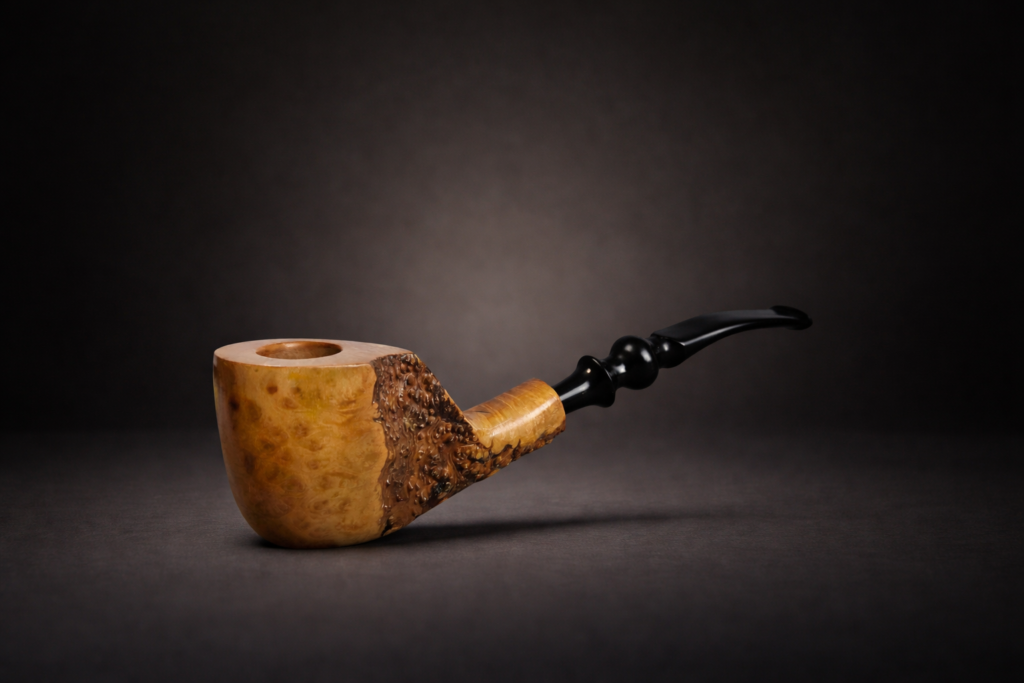
The moment grain is discussed, finish enters the conversation. A Smooth pipe reveals the grain directly. Sandblast and rusticated finishes speak in another language. This makes it easy for beginners to assume that smooth means higher quality and that every other finish is a kind of disguise. In reality, the matter is not so simple.
Some briar blocks call for a different finish not because they are worthless, but because another treatment suits the character of the material or the logic of the finished pipe more honestly. Sometimes accepting the material on its own terms is a better sign of quality than forcing the surface to imitate visual perfection. A good pipe does not become good only when it can tell a dramatic photographic story.
How to look at a pipe as a whole, not just at its surface
The next time grain immediately catches your attention, that is not a problem. The only problem is stopping there. After the first impression, it helps to ask a few grounded questions. How does the shape work? What does the stem look like? Are the measurements sensible? Does the relationship between bowl, shank, and stem feel coherent? Does the pipe seem made for real smoking or merely for admiration?
This is where a more mature eye begins. Grain remains important, but it returns to its proper place. It is no longer the judge of the entire object, only one witness among others. And a good decision rarely comes from a single witness.
A beautiful pipe and a good pipe do not need to be enemies
It is worth saying this as well: there is no need to swing to the opposite extreme. The goal is not to teach a buyer to despise beautiful grain or to feel embarrassed for caring about visual pleasure. Aesthetics are real. People bond with objects through sight as well as use. With pipes this is especially true, because they are objects many people choose with both the eye and the hand.
The real goal is simply to restore proportion. Beautiful grain can absolutely be part of a great pipe. Sometimes it is part of why a pipe is more desirable or more expensive. But it is not enough on its own. Once that becomes clear, the buyer does not lose the pleasure of looking. The buyer simply gains a deeper standard for deciding what is truly worth choosing.
Quality begins where surface is no longer enough
Grain is a beautiful servant but a poor master. It is useful when it helps you see harmony between material and form. It is misleading when it persuades you that a photograph has already settled the question of quality. Real pipe quality begins where surface stops being enough: in the drilling, the stem, the balance, the chamber, the comfort, and the logic of the object as a whole.
So the best approach is simple. Enjoy grain. Look at it. Appreciate it. But do not give it a task it cannot perform alone. A pipe is always more than its surface. And the buyer who understands that usually ends up buying not only the more beautiful object, but the wiser choice as well.