Why Two Handmade Pipes of the Same Shape Are Never Truly the Same
A shape name gives you a useful starting point, but it does not tell the whole story. Two handmade pipes that belong to the same shape family on paper may differ far more than a beginner expects: in balance, weight, stem work, proportions, and in the way they behave while being smoked. That is part of the beauty of handmade work. With a handmade pipe, you are not merely buying a billiard, a dublin, or a bent. You are buying a particular interpretation of that shape, translated into a real piece of briar rather than into an abstract drawing.
Shape is the beginning, not the whole truth
In the world of pipes, shapes function as a shared language. When someone says billiard, dublin, apple, or bent, a certain silhouette and structural idea immediately come to mind. That is useful, because without that vocabulary it would be difficult to compare pipes, discuss them, or search for them intelligently. But a shape is not a final verdict on what a pipe really is. It is only a starting framework.
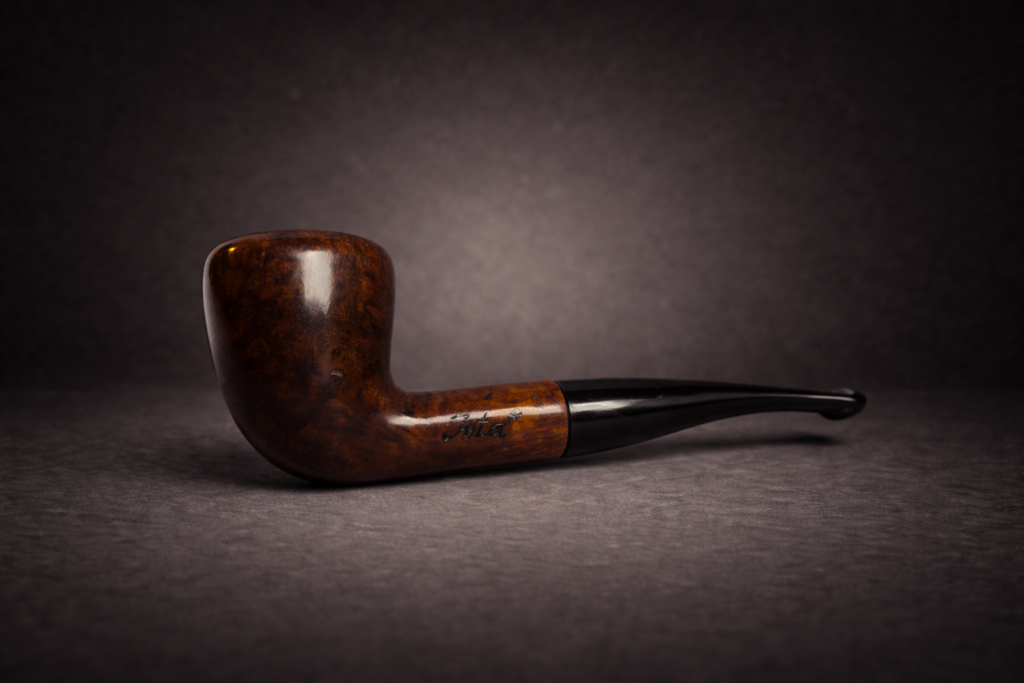
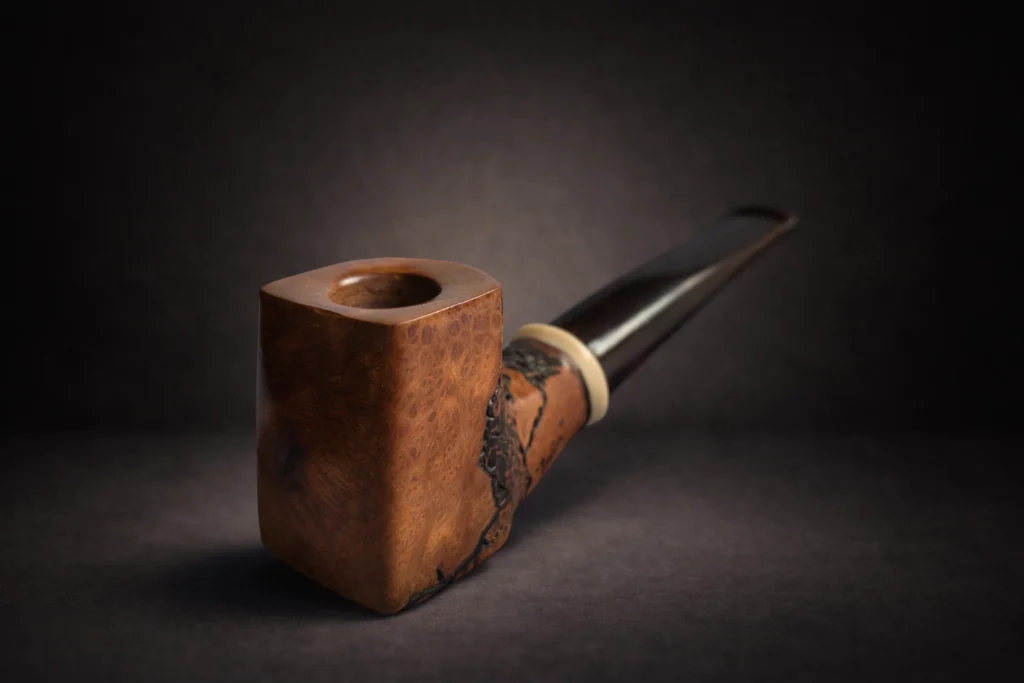
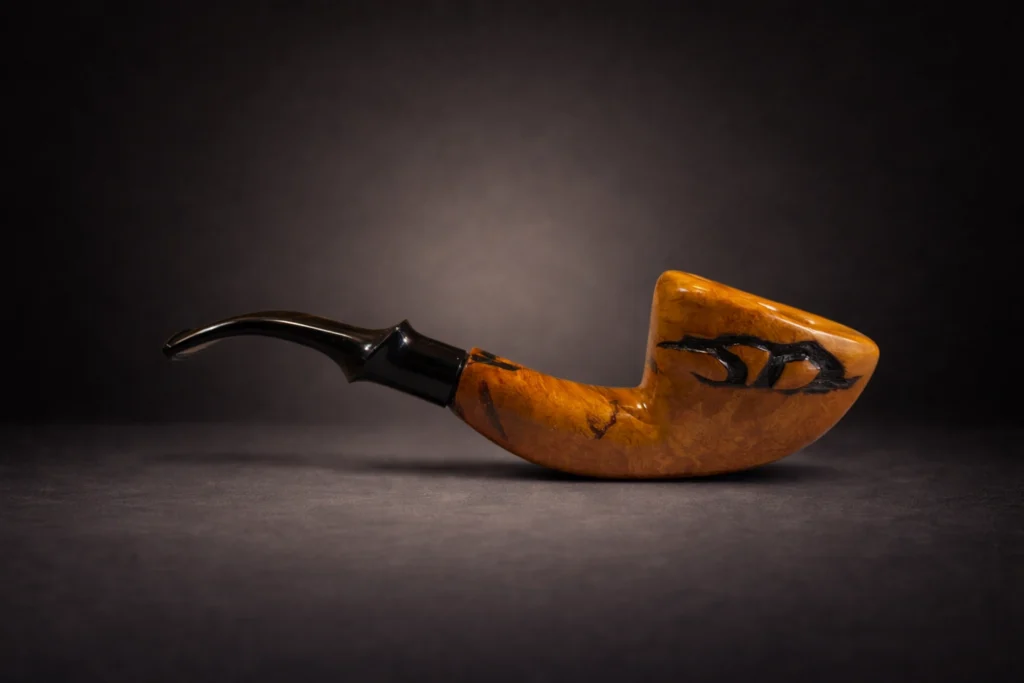
This is especially true with handmade pipes. In factory production, the same shape usually aims for greater uniformity. In handmade work, the same name does not mean the same object. Two pipes may both be billiards, yet one may feel restrained and almost severe, while the other carries more movement in the line, more tension in the transition to the shank, a different balance in the hand, and a very different behavior in the clench.
Why the same shape does not mean the same proportions
Beginners often imagine shape as an outline. They look at the silhouette and assume the matter is largely settled. But with pipes, proportions are everything. How tall is the bowl relative to its width? How long is the shank? Does the stem extend the line or quiet it? How much material remains around the chamber? All of this changes both impression and function, even when the pipe still belongs to the same shape family.
That is exactly why two handmade pipes of the same shape can carry entirely different characters. One may be slimmer and more elegant, another more compact and calm. One may invite a longer seated smoke, another may be more practical for a shorter session or for clenching. The shape name stays the same, but the object does not.
A block of briar is not a drawing on paper
When shape is imagined too abstractly, it becomes easy to forget that a handmade pipe does not emerge from a perfect mathematical model. It emerges from a real block of briar. That block has its own density, its own grain direction, its own limits, and its own opportunities. A good maker does not force the block to imitate a pre-set idea at any cost. He pays attention to what the material allows and where it asks for a slightly different solution.
That is one of the most interesting differences between handmade work and mere replication. Two pipes of the same shape are not different simply because someone wanted to be creative for its own sake. They differ because every block of briar brings different possibilities and different constraints. Handmade work is not variation as decoration. It is a conversation between form and material.
The maker’s hand changes what a catalog cannot describe
Even when the basic dimensions are very close, the maker’s hand leaves traces in things a catalog can barely capture. How strongly is the transition from bowl to shank emphasized? Does the pipe feel more tense or more composed? Does the shape seem grounded and stable, or lightly lifted? What rhythm does the line create between bowl, shank, and stem? These are not merely aesthetic games. They are decisions that change the entire experience of the object.
That is why it is not enough to say, “I like billiards.” It is much more useful to say, “I like a billiard that is not too heavy, that has a calm line, a comfortable stem, and a chamber that suits the way I smoke.” Only then does shape stop being a label and become a real preference.
Stem and balance: the difference a photograph only partly reveals
One reason two pipes of the same shape are never truly the same lies in the stem. Its thickness, taper, button, and integration into the overall line determine far more than appearance. One stem can make a pipe feel alive and precise, another can make it feel clumsy or tiring. The same is true of balance. A small change in the distribution of mass can completely alter how a pipe sits in the hand or between the teeth.
That is why more experienced buyers do not stop at the shape name. They look at weight, length, the relationship between bowl and stem, and only then decide whether they truly like a pipe or merely like the general idea of it. In a handmade pipe, those smaller factors are often what separate an object that is technically in the same family from one that genuinely suits you.
Drilling and chamber: similar form, different smoking behavior
Even when two pipes share a similar outer silhouette, they may behave differently in use because of the chamber and the drilling. Chamber depth and diameter, wall thickness, and the precision of the airway all affect pace, heat perception, moisture behavior, and the overall rhythm of the smoke. This does not mean shape is unimportant. It means shape is never the only layer of truth.
This is where many beginners fall into a common trap. They think that once they have found “their shape,” they have found “their pipe.” In reality, they may have found a promising direction. The true match appears only when shape, chamber, stem, and balance work together.
Why this is good news for the buyer
At first, this may sound like a complication. If even the same shape is not really the same, how is anyone supposed to choose? But in fact it is good news. It means you do not have to chase abstract perfection. You only need to find the specific pipe that suits your hand, your habits, and your rhythm. Handmade work does not offer random unpredictability. It offers the possibility of discovering, within a familiar form, the individual example that truly fits you.
That matters especially when buying a handmade pipe. Its value does not live only in beauty. It also lives in the way a known shape has been translated into a functional object. Two pipes may share a family resemblance and still possess very different personalities. And it is often in that personality that smokers eventually find the reason one pipe keeps calling them back.
How to look at the same shape more intelligently next time
The next time you compare two pipes of the same shape, try not to stop at the name. Look at the relationship between bowl height and width, the length of the shank, the line itself, the weight, the stem, and the chamber. Ask what serves your habits and what merely attracts your eye. In that moment, shape stops being a catalog label and becomes a useful instrument of understanding.
A handmade pipe is rarely interesting merely because it belongs to a certain shape family. It is interesting because it shows how that shape was thought through, measured, and turned into an object that should look good, yes, but more importantly live well in the hand and in actual smoking. No label can fully tell you that in advance.