Why Two Similar Pipes Don’t Always Smoke the Same
To a beginner, two pipes can look nearly identical and still behave very differently once lit. One may smoke calmly, stay cooler, and feel easy to manage, while the other asks for more relights, more attention, or a different cadence altogether. That difference is not magic. A pipe is not only its silhouette. Small variations in drilling, airway, stem fit, wall thickness, and balance can change how smoke moves, how heat behaves, and how forgiving the pipe feels. This article explains where those differences come from and how a beginner can start noticing them without turning pipe smoking into engineering class.
Why a “similar pipe” is often not a similar smoke
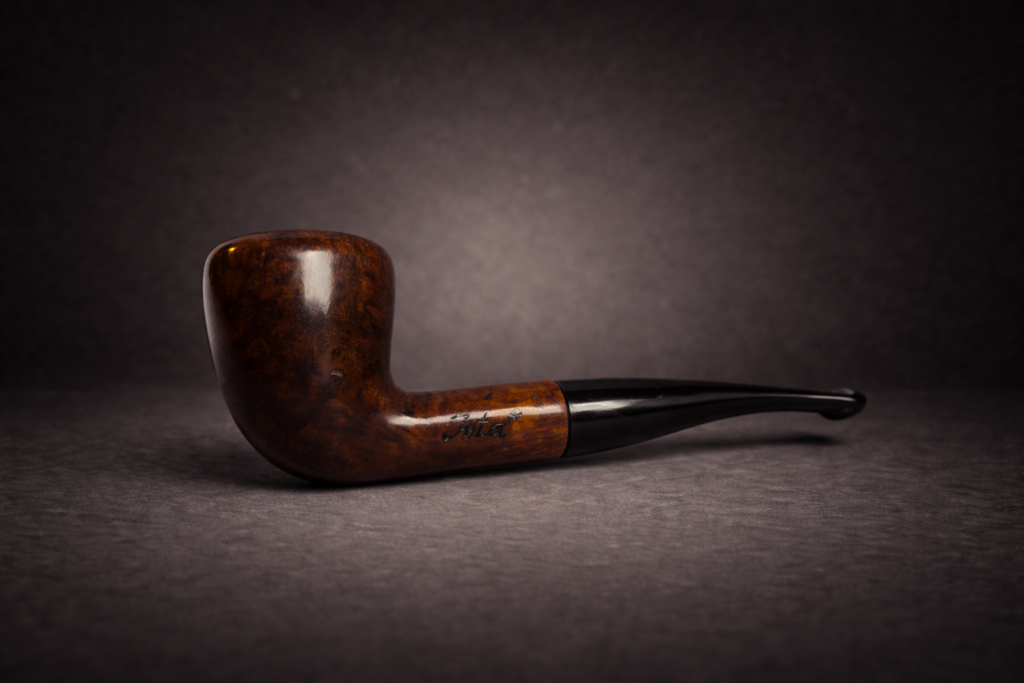
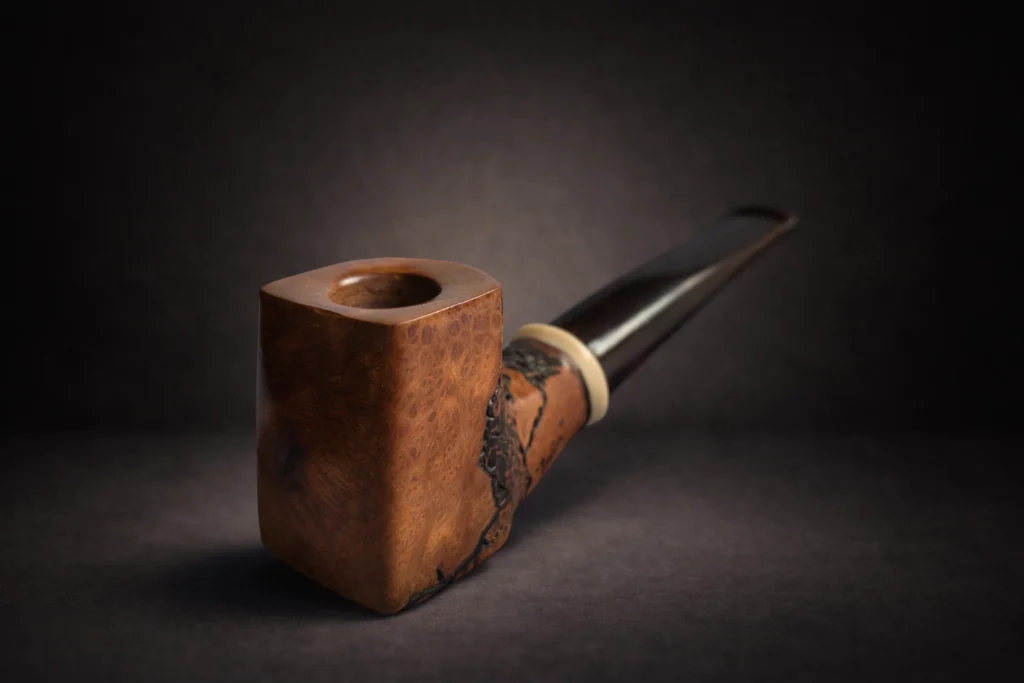
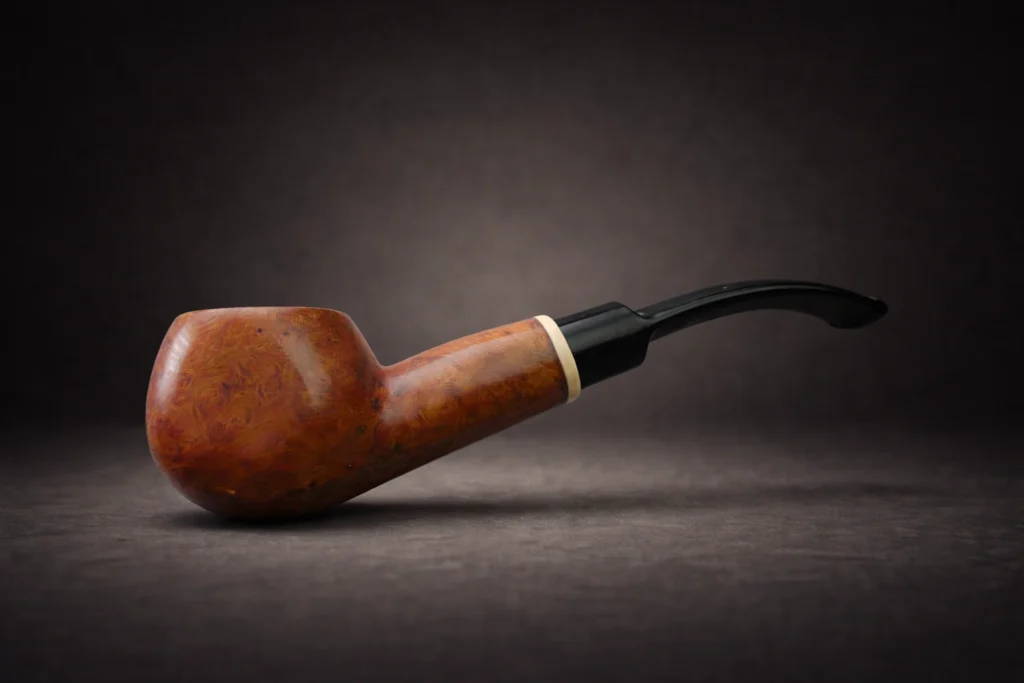
Two pipes can look almost like twins in a photograph. Same shape, similar length, close size, maybe even a similar price. So a beginner naturally expects them to smoke in roughly the same way. Then one pipe turns out calm, easy to keep lit, and pleasantly orderly, while the other seems to ask for more correction, a different cadence, or more attention overall. That is often the first moment when an important truth appears: a pipe is not only what the eye sees first.
This is not a reason for frustration. It is a reason for a better way of looking. In pipe smoking, small technical differences often matter more than visual ones. Two apparently similar pipes may have different drilling, a different airway feel, a slightly different stem fit, different wall thickness, or a different balance in the hand. All of those things influence how smoke travels, how heat stays in the bowl, and how forgiving the session feels.
Shape matters, but it does not tell the whole story
Beginners often read shape as the main answer. That makes sense. Shape is visible, memorable, and easy to compare. A billiard looks like a billiard, an apple like an apple, a dublin like a dublin. But two pipes that share the same broad silhouette are not automatically equal once tobacco enters the picture.
Shape gives you a framework: the relationship between bowl, shank, and stem, the feel in the hand, and sometimes a general expectation about chamber style. But what really determines behavior during a smoke often sits underneath that visible outline. A photograph captures form, but not always execution. Shape matters. It just does not get the last word.
Drilling: a small channel with large consequences
One of the most important differences a smoker gradually begins to notice is drilling, meaning the path the smoke channel takes through the pipe. When the drilling is precise, smoke tends to move more naturally, the draw feels more relaxed, and the pipe often asks for less struggle. If something is slightly off, the pipe may still be usable, but it can demand more adaptation and more patience.
This is not simply a matter of whether a hole exists. It is about where that channel exits, how it lines up with the chamber, and how naturally it supports the smoke path. A beginner may not always see this immediately, but can often feel it. One pipe seems to cooperate. Another seems to need extra work. That difference does not always show up in the main product photo, but it often becomes obvious by the third or fourth bowl.
Airway and the feeling of the draw
The airway, meaning the width and behavior of the air passage, directly affects draw. And draw is one of those things a beginner feels long before learning how to name it. When the draw feels natural, the pipe does not demand force. Smoke comes through without tugging. The ember stays easier to manage, and the whole bowl feels like it has room to breathe.
When the draw feels tighter, less natural, or simply a little nervous, the smoker often begins helping with force. Harder pulls, more heat, more intervention. That is how a pipe that looked almost the same on the shelf as another one can suddenly demand a very different style of smoking. It is not necessarily a bad pipe. But it is not the same pipe in practice.
Stem fit is more than a tiny detail
Beginners often think about the stem mostly in terms of comfort or appearance, but the stem-to-shank fit can mean more than that. The mortise and tenon relationship, the alignment, the precision of the fit, and the general sense of cleanliness in that connection all contribute to how orderly the system feels. Some pipes feel composed and well-resolved. Others give the impression that the parts meet, but do not quite belong together gracefully.
That does not mean every minor imperfection ruins the smoke. But it does mean that a well-executed fit often contributes to stability and calm. In a better-made pipe, you may barely notice that fact because nothing gets in the way. In a rougher one, you may feel a recurring small untidiness without knowing how to explain it at first.
Wall thickness and the way heat feels in the hand
Another thing many smokers only understand after some experience is the relationship between wall thickness and heat behavior. This is not a simple rule where thicker is always better or thinner is always worse. But wall thickness does influence how a pipe transmits and distributes heat, and that changes the feeling of the session more than many beginners expect.
Some pipes feel calmer because they hold and spread heat in a way that gives the smoker confidence. Others show very quickly when cadence begins to run too hot. That can be useful or uncomfortable depending on what you want and how stable your technique already is. Two visually similar pipes can therefore have very different temperaments in the hand.
Balance and the distribution of weight
There is also a difference people often underestimate because it seems less technical: balance. How the pipe sits in the hand, where the weight pulls, whether it feels composed or slightly awkward after a few minutes, all of that affects the smoke. A well-balanced pipe often feels more natural and less tiring, which in turn helps the smoker stay calmer. And a calmer smoker usually means a calmer bowl.
This is a good example of how “feel” is not the opposite of technique, but one of its results. A pipe is not automatically good just because it feels nice in the hand, but it is not trivial when one pipe feels settled and another a little restless. In pipe smoking, construction and habit are always in conversation with one another.
Why beginners often think the difference must be their fault
When two similar pipes behave differently, beginners often blame themselves first. Maybe they packed differently. Maybe their cadence was off. Maybe they do not yet know how to get the best out of the pipe. Sometimes that is partly true. But it is not always the whole story. Sometimes the difference really does live in the pipe itself.
This matters because it helps avoid two bad extremes. The first is blaming yourself for everything. The second is blaming the pipe for everything. A healthier view sits between them: technique matters, but pipes are not interchangeable simply because they look alike. Learning pipe smoking means gradually learning to read both the smoker and the tool.
What to watch for, especially when buying online
Do not look only at shape and finish
It is easy to fall in love with a silhouette or a grain pattern, but that is only the first layer. If extra images of the drilling, stem, or chamber are available, they often deserve more attention than color or surface finish.
Ask what you are really buying
Are you buying appearance, hand feel, an easier draw, a calmer smoke, or simply another attractive object? An honest answer reduces disappointment later.
Do not expect duplicate experience from similar-looking pipes
Even when two pipes share close dimensions, the smoke may still be different. If you accept that early, it becomes easier to give a new pipe a fair chance without loading it with false expectations.
When the difference becomes meaningful
A beginner does not need an obsession with millimeters or perfect drilling diagrams. But it is useful to know that differences exist and that they matter. The more you smoke, the easier they become to recognize. At first you feel them as “this pipe works with me” or “this one keeps making me correct it.” Later, you begin to understand why.
That is actually a good sign of progress. Not because you are becoming fussy, but because you are reading the pipe more carefully. Pipe smoking is often learned that way: first through impression, then through cause.
A good pipe is not only a beautiful pipe
In the end, the difference between two similar pipes is not mystical. It is the sum of small things. Drilling, airway, stem fit, wall thickness, balance, and overall execution together shape an experience that shape alone cannot promise. That does not mean every more expensive or more precisely made pipe will automatically smoke perfectly. It does mean the photograph never tells the whole story.
Once you accept that, you stop expecting every similar-looking pipe to deliver the same bowl. And you begin looking slightly deeper than the surface. At that point, you are no longer buying only a shape. You are beginning to learn how a pipe really works.