Smooth, Sandblast, or Rusticated: What Finish Really Says About a Pipe
Many beginners unconsciously assume that a smooth pipe is the top of the range, while sandblast and rusticated versions are merely consolation prizes for briar that was not beautiful enough. In reality, the relationship between finish, quality, and price is far more complex. A finish does say something about a pipe, but not always what first impressions suggest. It is worth understanding how different finishes are made, what they change in the hand and in everyday use, and why aesthetic hierarchy is not the same thing as smoking hierarchy.
Why Finish Leads to So Many Quick Judgments
We see a pipe before we smoke it. That is why finish shapes expectations so strongly. A smooth pipe feels elegant, clean, and often luxurious. A Sandblast looks livelier, more textured, sometimes rougher. Rusticated pipes carry an impression of rustic character, personality, or deliberate tactility. All of that happens before the pipe has touched fire.
The problem begins when that first impression becomes a final verdict. Then smooth becomes a synonym for the highest quality, while blasted or rusticated versions automatically fall into a lower league. That is too simple a story. Finish can reflect aesthetic choice, the character of the briar, the workshop from which the pipe comes, and its market range, but by itself it does not give a complete answer about how the pipe will smoke.
What a Smooth Finish Means
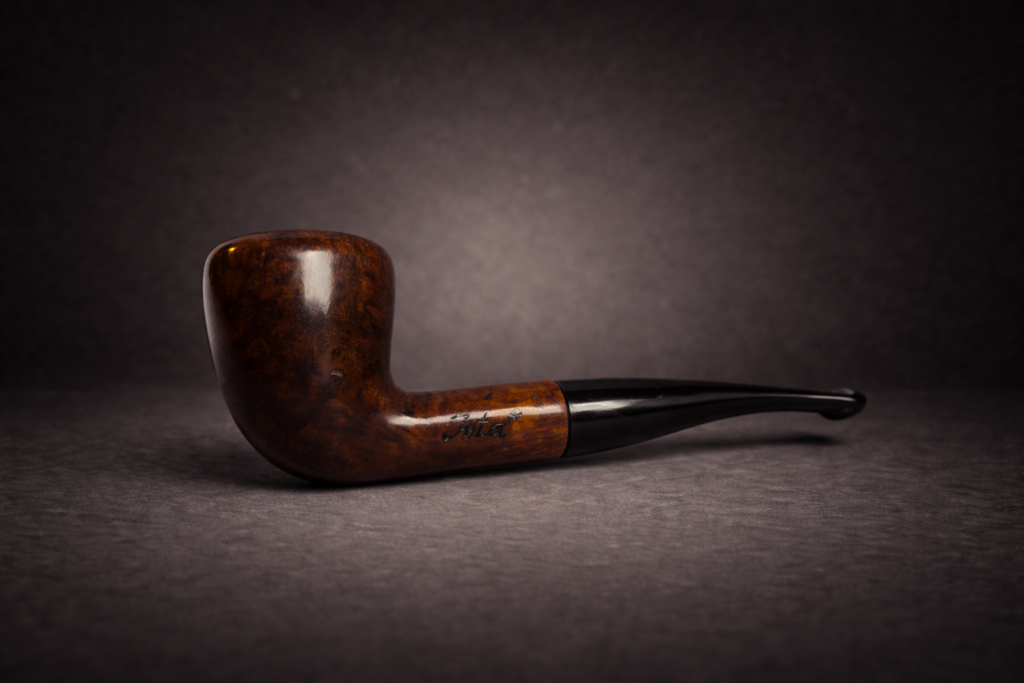
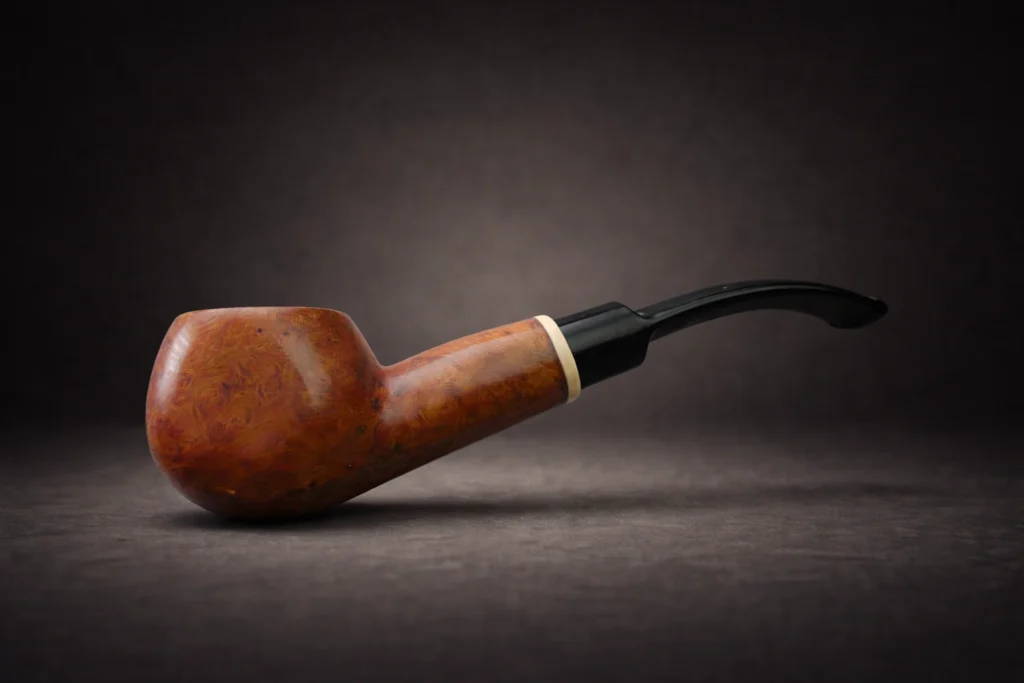
A smooth pipe shows the surface of the briar without textured treatment. That allows the grain to be visible, and often for that reason smooth models draw the most admiration. When a piece of briar is beautiful, a smooth finish can seem almost inevitable. It is a way of presenting the material without concealment.
But this is also where the first illusion begins. Visible grain and elegant smoothness do not, on their own, guarantee better internal execution. They may go together with superb engineering, but they may also be only a visual advantage. A smoker who forgets that may pay for beauty while assuming they are buying functional superiority that is not necessarily present to the same degree.
Sandblast: Texture That Is Not a Plan B
Sandblast was for a long time too often treated as though it were merely a consolation prize for briar that could not become a showpiece smooth pipe. That may be part of the story sometimes, but it is not the whole story. A well-executed sandblast is not a leftover after disappointment. It is a finish with its own identity. It offers texture, depth, and a very specific feeling under the fingers.
That is exactly why many smokers love blasted pipes for everyday use. They feel different in the hand, age visually in a satisfying way, and often seem less like display pieces. That does not mean they are automatically better smokers, but it does mean they should not be treated as second-rate simply because they do not present the briar in the same polished manner.
Rusticated: Character, Strategy, or Compromise
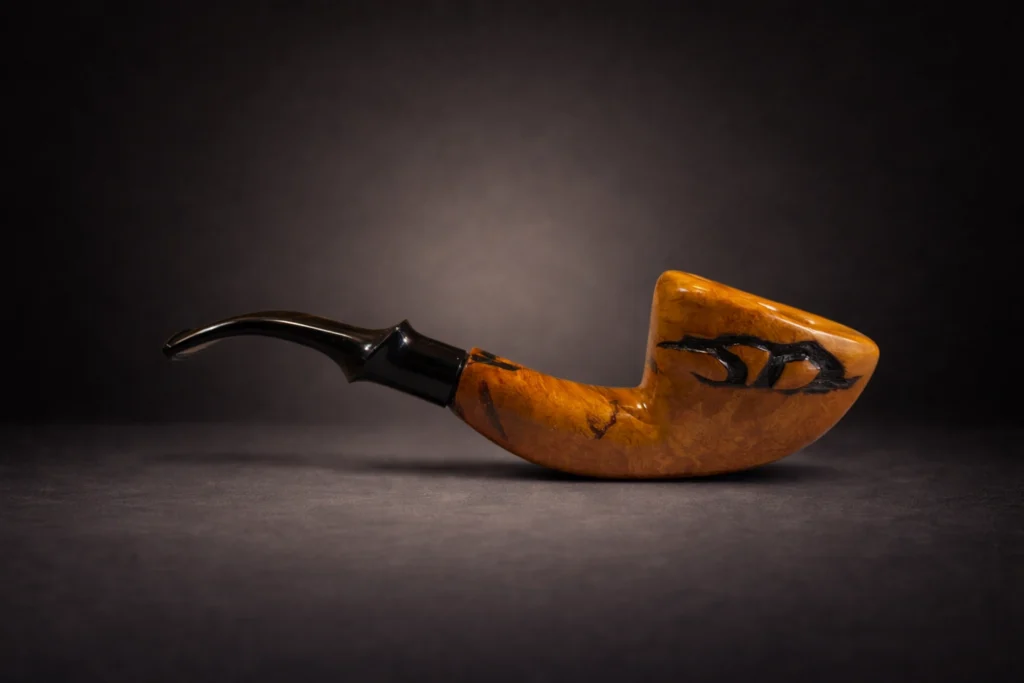
Rusticated finish complicates the story even further. It can be an aesthetic choice, a way of giving the pipe strong tactile character, and at times it can indeed be a way of resolving surface imperfections visually. But none of that means every rusticated pipe is less valuable or less serious. As with everything else, execution is what matters.
There is rustication that looks crude and accidental. There is also rustication that feels deliberate, rhythmic, and almost sculptural. For a smoker, it is useful to distinguish between those two things. Because finish is not just about what was done to the surface, but how it was done.
Does Finish Change Only Appearance or Also the Experience?
The most honest answer is this: primarily appearance and tactile feel, but not only that. The way a pipe sits in the hand, how slippery it is, how it ages on the surface, and how relaxed you feel while using it are all small parts of the experience that cannot be reduced to decoration. Smoking is not only smoke. It is also a relationship with an object.
But when speaking about the character of the smoke itself, caution is needed. Claims that a certain finish by itself dramatically changes temperature or smoking quality are often exaggerated. Much more depends on wall thickness, engineering, material, and the way you smoke. Finish may influence how the pipe feels in the hand, but it is rarely the main reason for what happens in the bowl.
How to Choose Without Snobbery or Defensive Cynicism
The worst choice is buying smooth because you think a “serious pipe must be smooth.” It is equally poor to buy blasted or rusticated simply to prove you are above such hierarchies. Finish should be chosen as a combination of taste, use, and quality of execution. If a pipe calls to you through the eye and the hand, that is an important signal. It is just not the only one.
A wiser buyer asks three questions: do I like it, is it well made, and do I understand what I am actually paying for? When those three answers align, finish stops being a source of prejudice and becomes what it should be: part of the pipe’s character, not its entire judgment.