Smooth, Sandblast, or Rusticated: Is Finish Only About Looks?
To most beginners, pipe finish first appears to be a matter of taste. One pipe is smooth and elegant, another sandblasted and more alive under the fingers, a third rusticated and rougher, almost as though it wants to show character rather than hide it. At first glance, all of this looks like a visual choice, something that speaks about style but not necessarily about practical difference. And yet finish is not only about appearance. It also changes touch, the feeling of warmth in the hand, the relationship to signs of wear, and the overall sense of how a pipe ages alongside its owner. That is why this article does not look for a winner between smooth, sandblast, and rusticated finishes. It tries instead to explain what in them is mainly aesthetic and what in them belongs to everyday experience.
Why finish looks like pure aesthetics at first
When someone first begins looking seriously at pipes, finish is easiest to read with the eyes. Smooth appears elegant and classical. Sandblast looks textured, lively, and often a little more artisanal. Rusticated looks rougher, sometimes rustic, sometimes deliberately raw. All of that naturally encourages the idea that finish is mostly about style and has little to do with the smoking life of the pipe.
That conclusion is not entirely wrong, but it is too narrow. Finish really is an aesthetic decision, yet it is not only that. It determines how the pipe will feel in the hand, how it responds to small traces of daily use, how it will look over the years, and what kind of intimacy or distance it creates between object and owner.
In other words, smooth, sandblast, and rusticated are not merely three ways for briar to look different. They are also three ways for a pipe to be experienced.
What a smooth finish truly offers
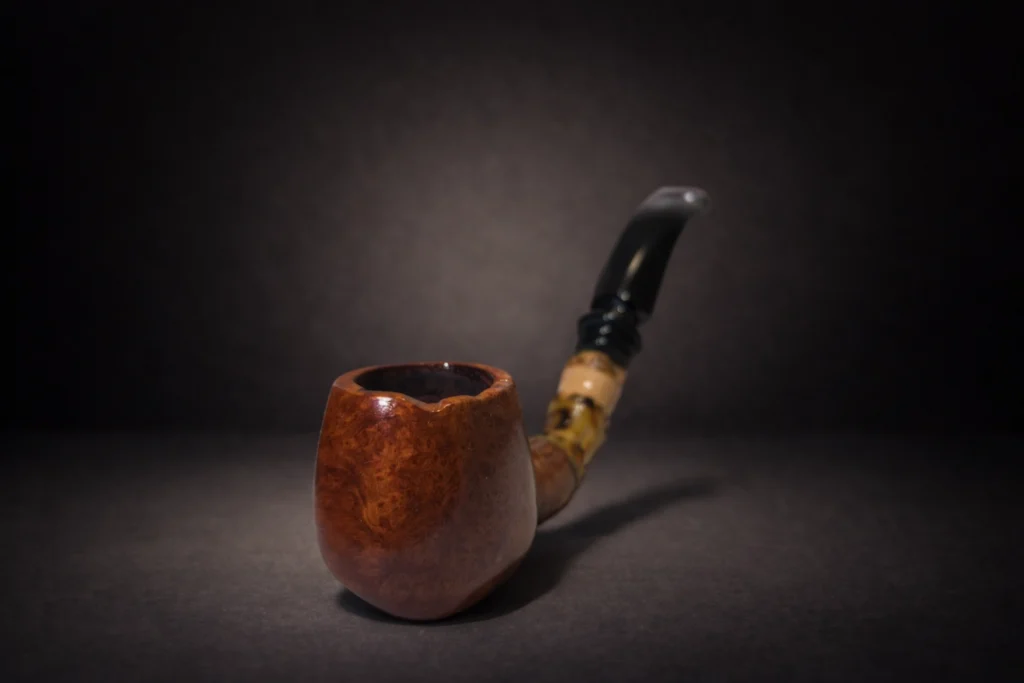
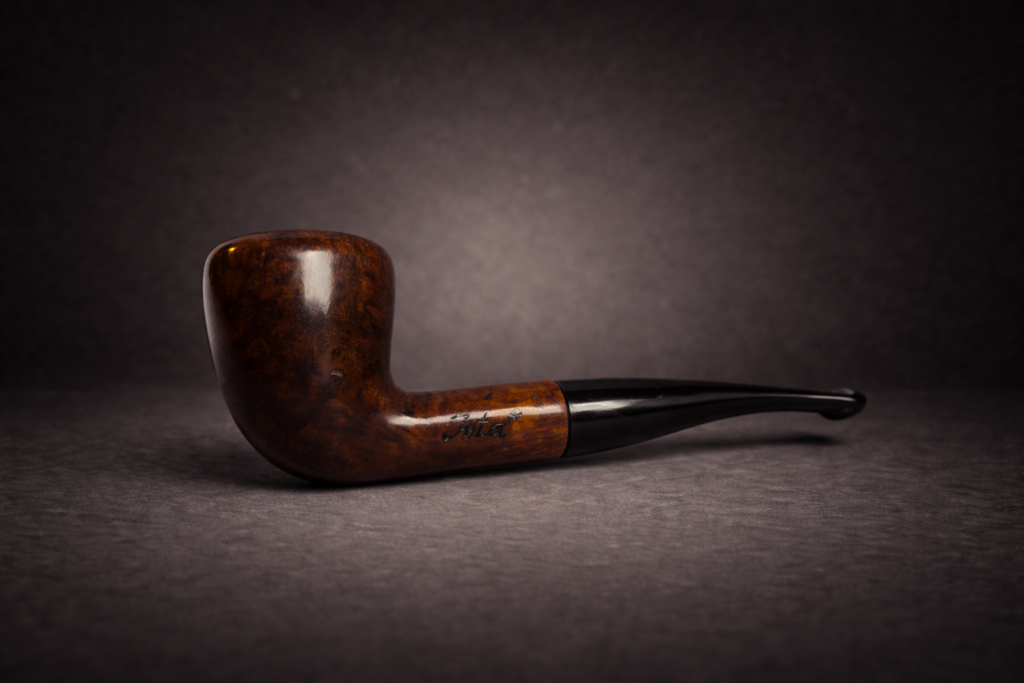
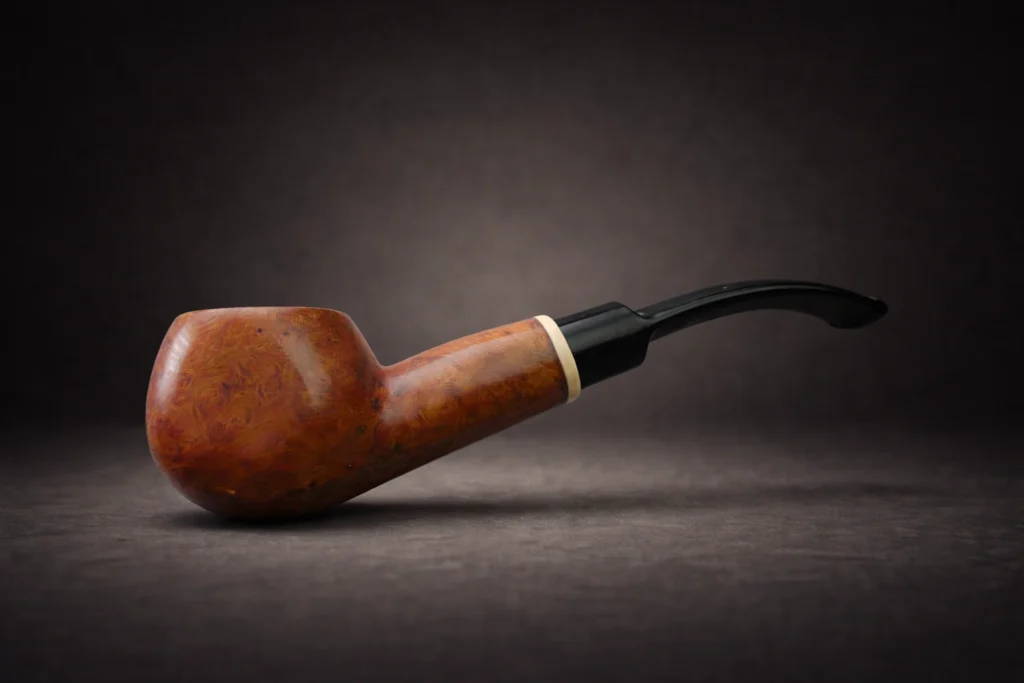
A smooth finish is most often seen as the classical, clean expression of a pipe. When well executed, it allows the grain, color, and overall nature of the briar to show without interruption. That is one reason many smokers experience smooth pipes as more elegant or formal. They seem to display the material itself rather than cover it with texture.
But smooth is not only visual. In the hand, it creates a different sensation: quieter, sleeker, often more refined. Some smokers love that immediately. Others miss a little more grip and a little more tactile personality.
There is another side as well. Smooth surfaces often show small signs of use more clearly. Finger contact, subtle wear, and changing color become part of the pipe’s visible story. For some people, that is part of the beauty. For others, it is exactly why they prefer a finish that hides everyday life more easily.
Why people are drawn to sandblast
Sandblast has a distinct kind of charm. It does not hide the fact that the pipe has a surface, a texture, and a relief. It emphasizes it. A well-executed sandblast can look very alive because the relief often follows the nature of the briar and gives the surface rhythm that smooth pipes express differently.
In practice, that often means a better sense of grip and a more tactile relationship to the object. Sandblasts frequently feel less slippery and more companionable in daily use. This is not a dramatic technical change, but it is a very real one for anyone who actually holds, turns, and smokes a pipe regularly.
That is why sandblast often appeals especially to smokers who want seriousness and character without an overly polished formality. It can feel elegant, just in a different register than smooth.
Rusticated: rougher appearance, not necessarily rougher experience
To beginners, rusticated finish often looks like the most rugged and least refined option. As though the pipe were less “fine” and more plainly utilitarian. That can be true in some aesthetic cases, but it is unfair to read all rusticated pipes as lesser or less interesting. Rustication also offers texture, grip, and a distinct way of relating to the pipe, only more explicitly than sandblast.
Some rusticated pipes feel almost workmanlike, as though they are unconcerned with formal elegance. Others have a thoughtful, almost sculptural roughness. For the smoker who values secure feel in the hand and does not care deeply about displaying straight grain, a rusticated finish can make perfect sense.
One large beginner mistake is to assume rustication is only a cheaper imitation of a “real” finish. Sometimes it is a simpler choice. But sometimes it is a very deliberate aesthetic and practical direction.
What really changes in everyday use
The greatest practical differences between these finishes do not happen in theory. They happen in small everyday realities. How a pipe sits in the hand if your palm is slightly warm or damp. How much it bothers you if signs of use become visible. Whether you enjoy looking at grain, or care more that the pipe feels more relaxed and less visually precious.
A smooth pipe often creates a different relationship: more visual clarity, and often more awareness of how it ages. Sandblast and rusticated finishes more often feel forgiving in daily life. Not because they are automatically technically better, but because they carry touch, wear, and quiet aging in a different way.
Does finish affect how a pipe smokes?
This is the place where caution matters. In the pipe world, there are many assumptions and confident statements about how smooth, sandblast, or rusticated pipes “smoke.” The problem is that such claims can easily harden into dogma. Finish by itself is not a magical mechanism that decides whether a pipe will be a better smoker.
Drilling, overall engineering, chamber quality, cadence, and the tobacco itself matter much more. That does not mean tactile and thermal impressions of the surface are imaginary. They are real. But it is not fair to turn them into a fixed formula that one finish must automatically smoke better than another.
How finish changes the relationship to aging
This is one area where finish truly matters. A smooth pipe ages visibly. Color, subtle wear, and little changes on the surface often become easy to read. Some smokers find that beautiful, because the pipe develops a personal history. Others find it slightly stressful, because they would rather the object remain visually tidier for longer.
Sandblast and rusticated finishes carry time differently. Their texture often tolerates small signs of use more quietly. That does not make them indestructible. It simply means they age in another language and reveal daily life in a different way.
Who tends to prefer what
The smoker who loves classical elegance, a calm surface, and the visible nature of briar will often drift naturally toward smooth pipes. Someone who wants more tactile character while still valuing refinement may fall for a good sandblast. And the smoker who cares most about grip, practicality, and a less formal but more companionable presence may discover that rustication fits best.
None of this is a hierarchy of taste. It is simply a difference in how a pipe enters the hand and the life of its owner.
How to choose finish more intelligently
The most useful move is to stop asking which finish is better and start asking what you want from the pipe. Do you want to study grain and color? Do you want a calmer surface but one that may show life more clearly? Do you prefer texture and surer grip? Would you enjoy a pipe that ages visibly, or one that hides daily traces more gently?
Those questions help much more than any broad judgment about smooth, sandblast, or rustication. Because finish is not only appearance. Finish is also the kind of relationship you choose to have with the object.
What is worth remembering in the end
Smooth, sandblast, and rusticated are not just three aesthetic schools. They genuinely change touch, feel in the hand, relationship to wear, and the way a pipe grows older with its owner. What should be avoided is turning those differences into a myth that one finish automatically means better smoking.
It is far more useful to see them for what they really are: different combinations of appearance, touch, and everyday practicality. Once you do that, the choice becomes much more personal—and much more intelligent.