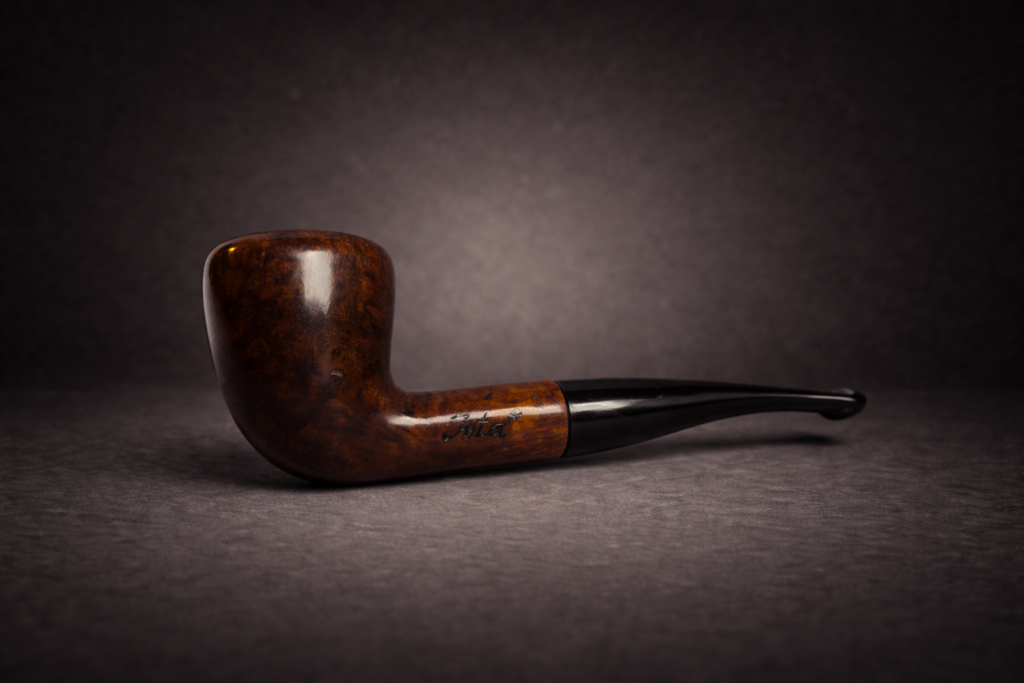
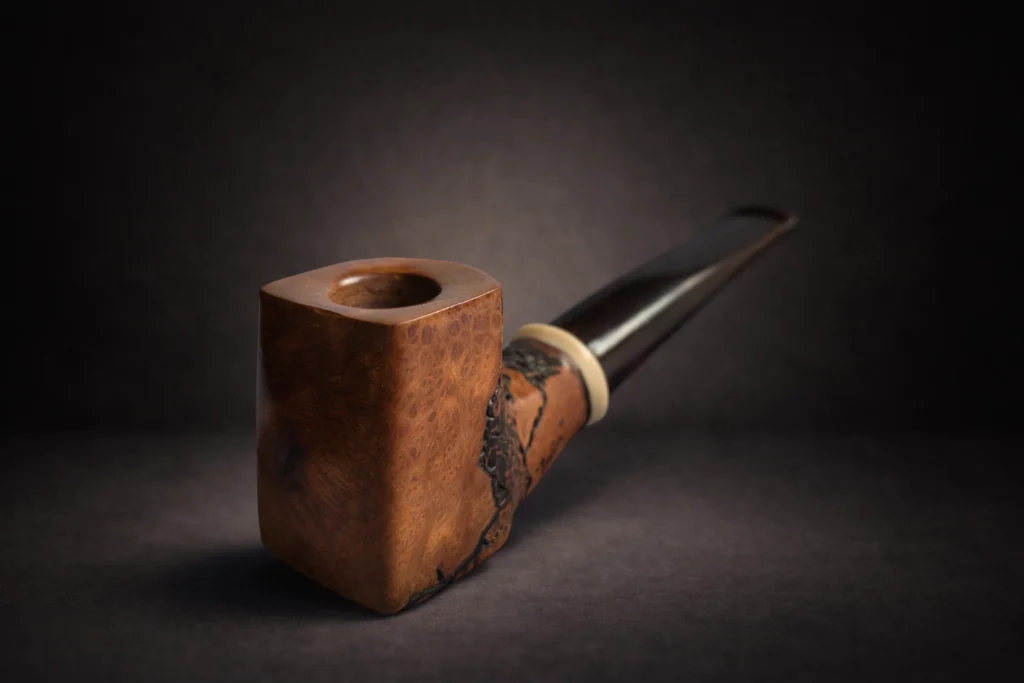
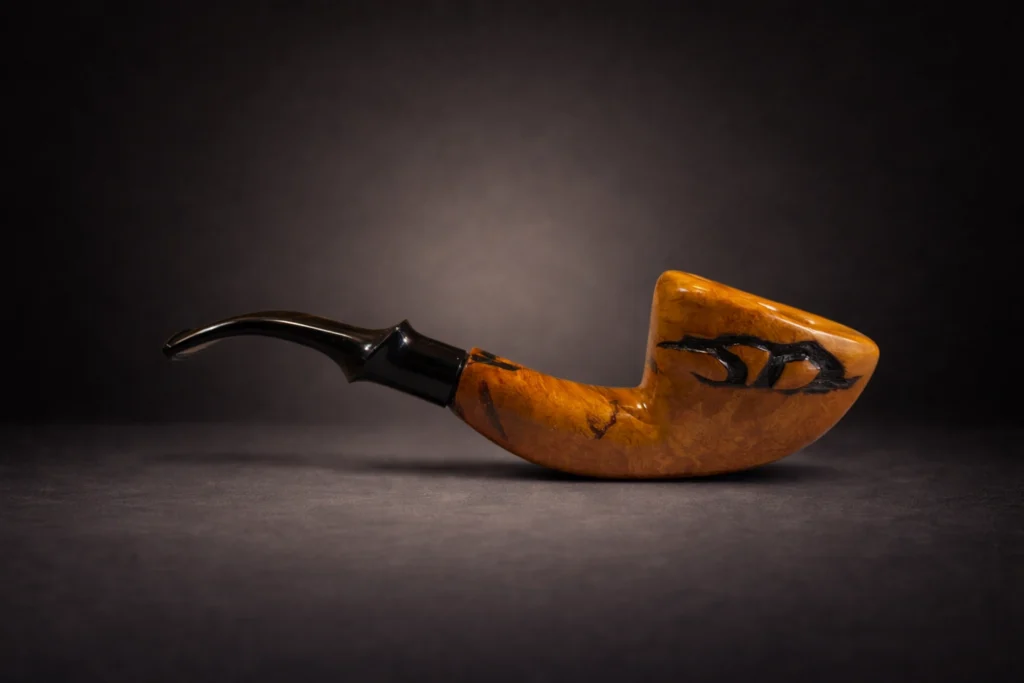
Handmade vs Factory Production: What You Really Get, and What You Only Imagine
When people compare handmade pipes and factory production, the conversation quickly slips into myth. One side treats anything handmade as a higher truth, while the other reduces every difference to story, impression, and more expensive marketing. Reality is more interesting than that division. A factory pipe can be very good, reliable, and honestly made. A handmade pipe can offer something a factory pipe often cannot: more individual proportion, more attention in the details, more adaptation, and more personality. But that does not mean every handmade pipe is automatically better. Value does not hide in the label. It lives in how the object is actually executed and in whom it is meant to serve.
Why this comparison so easily becomes a bad argument
Few subjects in the pipe world fall into simplistic camps as quickly as handmade versus factory production. The moment the topic appears, people feel pressure to choose a side: either handmade is the only true path, or the entire idea of handwork is merely a romantic fog around a more expensive product. Both extremes miss what is most interesting.
A factory pipe is not automatically soulless, and handmade work is not, by itself, proof of quality. A good pipe does not emerge from slogans. It emerges from specific decisions: materials, geometry, stem work, balance, fit, the way a shape is translated into a real object, and how well that object suits a real smoker. Anyone who wants to think about this seriously has to abandon the desire for a quick verdict.
What factory production actually does well
Factory production is often imagined unfairly as a world of cold compromise. The truth is that repetition, pace, and standardization can also create certain strengths. Good factory pipes often offer consistency. The buyer knows roughly what to expect, dimensions are predictable, shapes remain stable, and the price is usually more approachable than in the world of handwork.
For many smokers, that is an entirely reasonable choice. Not everyone wants an object with strong personality or a long conversation with a maker. Some people simply want an honest pipe that serves well, one that does not require an emotional essay before purchase and offers solid value without unnecessary risk. In that sense, factory production need not be inferior or merely a beginner’s option. It can simply be rational.
Where handmade work begins to offer something different
Handmade work shows its value where standardization naturally stops. With a handmade pipe, the maker has more room to guide the object not only toward a general formula, but toward a particular block of briar, a particular sense of line, a particular balance, and often toward a particular person who will use the pipe. That does not automatically mean perfection, but it does mean more freedom to give the object a proportion that does not come from the average case.
This is often where the differences appear that the buyer only feels over time: a stem that seems more thoughtful, transitions that are calmer, a shape that looks not merely correct but convincing, and a whole that gives the impression of not having been stopped too early. In good handmade work, one senses that the maker could have quit at several points, but chose not to.
Why handmade is not an automatic guarantee
The word handmade is easy to fall in love with. It carries warmth, human scale, and the promise of greater care. But the word is not the same thing as execution. A poorly considered handmade pipe can still have a bulky stem, weak balance, awkward drilling, or a shape that performs more than it truly lives in the hand. Handwork is not a magical seal. It is simply a possibility for a higher level of work.
This matters because the market loves short formulas. Handmade can sound as though the question has already been settled. It has not. Handmade matters only when the extra freedom and attention are genuinely visible and usable in the object itself. Once a buyer understands that, he becomes less vulnerable to language and more attentive to what is actually in front of him.
Where the price difference usually really comes from
The price difference between a handmade pipe and a factory pipe does not come only from “story.” It often comes from time, material selection, the amount of hand labor, a slower rhythm of work, hand-finished or hand-cut stems, finer control over details, and of course from producing far fewer pieces. Once something is no longer built around volume, the price naturally behaves differently.
But here too, one should avoid naïveté. A higher price is not automatically a higher value for every buyer. Sometimes you are paying for stronger personality, more beautiful grain, or a more distinct maker’s touch. For some smokers, that matters greatly. For others, not nearly as much. A sensible buyer therefore asks not only, “Why does this cost more?” but also, “Does what makes it cost more actually matter to me?”
The personality of the object: true value or romantic excess?
One of the genuine differences in handmade work is personality. A factory pipe usually belongs clearly to a model. A good handmade pipe often feels as though it has its own measure and its own voice. This is difficult to quantify precisely, but it can be felt in the relation of lines, in the way the pipe sits in the hand, in the way the stem enters the whole, and in the impression that the object is not merely correct but present.
That means a great deal to some smokers and almost nothing to others. There is no single right answer here. The trouble begins only when personality is sold as a substitute for function. A good handmade pipe should not demand forgiveness for basic flaws merely because it is unique. Uniqueness is not an excuse. It is, at most, an added value once the fundamentals are already in place.
When a factory pipe makes more sense than a handmade one
There are situations in which a factory pipe is simply the better choice. If you are still early in your pipe journey and do not yet know what suits you, beginning with something more stable and financially rational may be wise. If you want a dependable object without a large emotional investment, a factory pipe can be an honest and excellent decision. If you do not care about an individual interpretation of shape or a personal exchange with a maker, handwork does not need to become an obligation.
Sometimes sobriety is the finest luxury. Instead of buying an idea of yourself as the owner of a handmade pipe, you may benefit more from an object that simply serves you well. That too is entirely legitimate.
When handmade truly makes sense
Handmade work begins to make the most sense when you know you want more than correctness. Perhaps a hand-cut stem matters to you. Perhaps you want a shape that does not feel generic. Perhaps you want a particular relationship between chamber and weight, or perhaps the possibility of speaking with the maker matters to you. At that point, the difference is no longer abstract. It becomes personal.
For some smokers, a handmade pipe only begins to make sense after experience. For others, it can be a good choice earlier, but only if they are not buying prestige as such. Handwork matters most when you are not merely buying the status of handmade production, but actually making use of what that production enables.
The real question is not what is “better,” but what matters more to you
In the end, this comparison becomes clearer the moment we stop looking for a universal winner. Factory and handmade pipes are not two camps in which one must lose for the other to make sense. They are two answers to different priorities. One emphasizes consistency and rationality; the other leaves more room for individual measure, detail, and personality.
A good decision therefore does not begin with “Which is objectively better?” It begins with “What matters more to me at this stage?” Once the buyer knows that honestly, handmade ceases to be a religion and factory production ceases to be unfairly dismissed. Both return to their proper place: as different paths toward a pipe that should serve well, not merely sound impressive in conversation.