P-Lip or Fishtail: How the Mouthpiece Changes the Feel of Smoke
When beginners buy a pipe, they usually focus on the bowl, the shape, the finish, and perhaps the brand. The mouthpiece often feels like a minor detail, more decorative than practical. Only later do many realize that this “small piece at the end” can change the whole feel of the smoke, the comfort in the mouth, and the way a pipe behaves over a longer session. That is why comparing P-Lip and fishtail mouthpieces is not a technical footnote but a practical question. The point is not to find a universal winner. It is to understand why one type immediately suits one smoker and never suits another, and how that choice affects the tongue, the palate, clenching, and the overall impression of smoking. Once you know that, you no longer choose a pipe only with your eyes.
Why the mouthpiece is not just a finishing detail
Beginners often look at a pipe as a whole in which the bowl shape, bowl size, and perhaps the brand carry the main weight. The mouthpiece slips below the radar. It seems like the final piece, something that is simply there because it has to be. In practice, the situation is very different. The mouthpiece is where the pipe meets the body most directly: the lips, the teeth, the tongue, and the rhythm of breathing.
That is why the difference between two mouthpiece styles is not a fussy argument for people who prefer catalogs to smoking. It is a very concrete difference in experience. The way smoke exits the mouthpiece, how the piece sits between the teeth, and where the stream of smoke lands in the mouth can completely change how a smoker experiences the same pipe. That is where the story of P-Lip and fishtail mouthpieces begins.
What a fishtail mouthpiece is
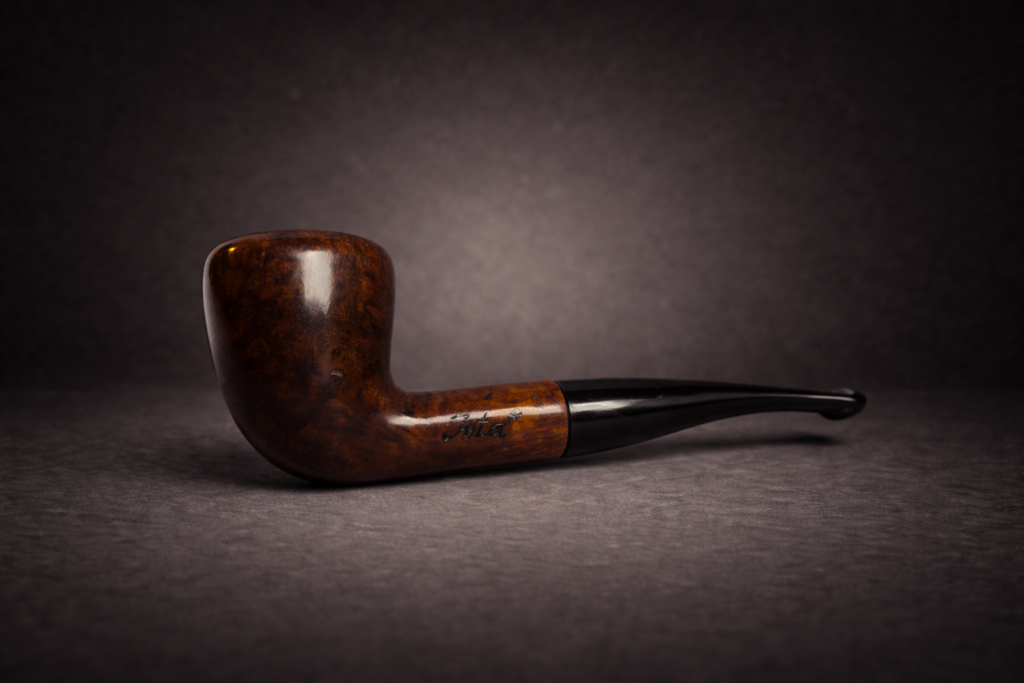
A fishtail is the classic style that most smokers imagine when they think of a standard pipe. The end is shaped so that smoke leaves in a straighter, more direct way toward the center of the mouth, and the overall feel often seems familiar and intuitive. That is why many smokers do not even think of it as a special category. For them, it is simply the normal mouthpiece.
That does not mean fishtail is universally perfect. It simply means it is the baseline for many people. Smokers who enjoy a traditional feel in the mouth, a slimmer profile, and the sense that smoke arrives directly and without a trick often gravitate to fishtail immediately. Its advantage is precisely that it does not try to seem special. It just wants to work clearly and predictably.
What P-Lip is and why it attracts so many opinions
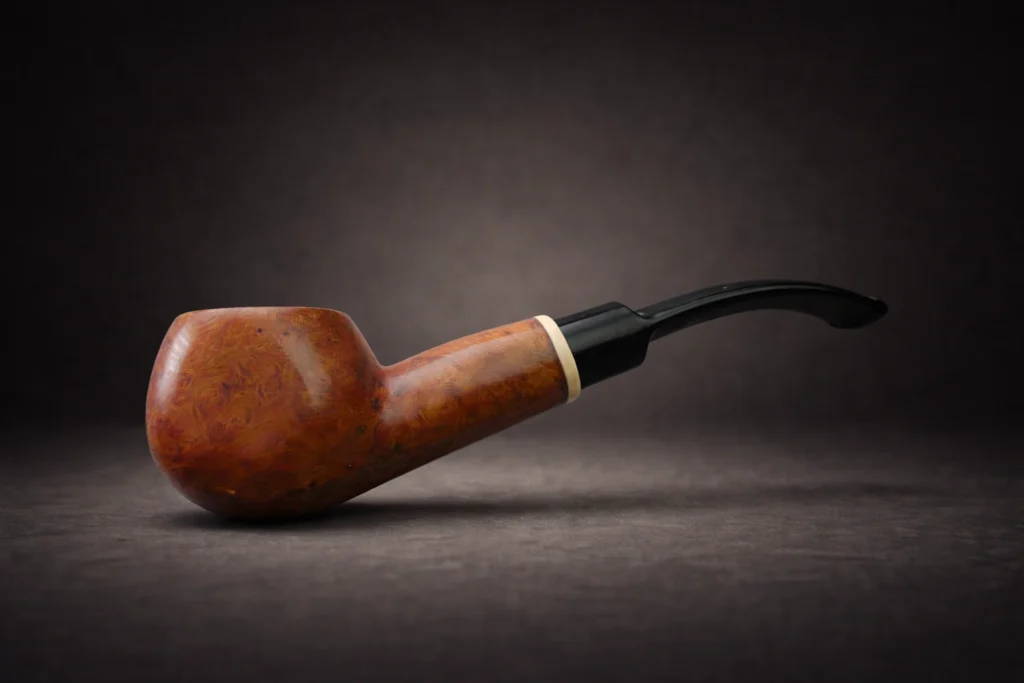
P-Lip is a different concept. Instead of sending smoke straight toward the tongue or the center of the mouth, its opening is shaped so that the stream moves more upward, toward the palate. The idea behind it is that smoke hits the tongue less directly, which may help some smokers experience the smoke as softer and less irritating.
In theory, that sounds persuasive. In practice, reactions are divided. Some smokers love P-Lip and insist it gives them a longer, gentler smoke, especially if they have a sensitive tongue. Others dislike it because it feels unusual, thicker, less natural, or simply because the path of the smoke does not suit them. P-Lip is a useful reminder that a smart technical idea does not automatically become a universal answer.
How the direction of smoke changes the smoking experience
The most important practical difference between the two mouthpieces is not philosophical. It is physical. With a fishtail, many smokers feel that the smoke arrives more directly, more clearly, and with a simpler sense of contact. With a P-Lip, the experience may feel softer or more diffused and, for some smokers, stranger at first until they adapt.
If you are someone who often experiences tongue irritation, P-Lip may be worth exploring precisely because it tries to change the path of the smoke. If you prefer a more immediate sensation, you may feel that fishtail gives you a cleaner line to the flavor. There is no absolute truth here. Two smokers can use similar pipes with the same tobacco and still reach very different conclusions simply because the mouthpiece sits differently in their mouths.
Can P-Lip help with tongue bite
This is the question that makes many smokers start paying attention to mouthpiece type at all. The answer is that it may help some smokers, but it is not a magical cure. If your tongue often feels irritated, P-Lip is worth trying because the altered direction of smoke genuinely does help some people. But tongue bite does not come from one cause alone. Cadence, moisture, packing, blend type, and personal habits all play a role.
So the fairest way to say it is this: P-Lip can be a useful tool, but it does not replace technique. If someone smokes too fast, draws too hard, and overheats the pipe, no mouthpiece will fix that by magic. On the other hand, if a smoker is already fairly controlled and still feels the classic smoke path bothers the tongue, P-Lip can feel like a real discovery.
Clenching, teeth, and general comfort
A mouthpiece is not only about smoke. It is also about mechanics in the mouth. How the pipe sits between the teeth, how stable it feels, and how tiring it becomes over a longer smoke all matter. Some smokers like P-Lip because it feels steadier in the clench and because the way it rests against the palate simply suits them. Others dislike it for exactly the same reason: it feels intrusive and disrupts a natural position.
Fishtail is often easier for many smokers to accept instinctively because it asks for little adaptation. P-Lip sometimes asks for more. That is not a flaw, but it is useful to know. Beginners often imagine they will feel the difference instantly as “better” or “worse.” More often, one type of mouthpiece needs several longer sessions before you can honestly decide whether it suits you.
Why some smokers never switch to P-Lip
Even when they admit that P-Lip has a certain logic, many smokers remain loyal to fishtail. The reason is not necessarily stubbornness. Often it is habit and the feeling that a classic mouthpiece gives them more control, a more natural flow, and a slimmer, more comfortable profile between the teeth. For them, P-Lip is a good idea that simply makes no sense in their own mouths.
That is a good lesson for beginners too: there is no mouthpiece that wins on paper. There is only a mouthpiece that suits you more or less. Once you understand that, you save yourself from many arguments in which people try to present their personal comfort as a universal law.
How to decide intelligently which suits you better
The best method is not to read ten more arguments. It is to try both if possible. Ideally, that means similar conditions: similar pipes, similar tobacco, similar cadence. Only then does the comparison become meaningful. Otherwise, it is easy to end up judging the whole pipe rather than the mouthpiece.
If you cannot try before buying, ask yourself a few simple questions. Do you have a sensitive tongue? Does smoke that feels too direct bother you? Do you enjoy experimenting with ergonomics? Then P-Lip may be worth trying. Do you prefer a classic feel, a slimmer profile, and almost no adjustment period? Then fishtail is probably the safer choice.
The mouthpiece is not an ideology
Pipe culture sometimes turns small differences into camps, as if a mouthpiece choice reveals something profound about a smoker’s character. In reality, it is a very practical matter. One style fits one anatomy, one habit, and one cadence better; the other fits someone else. There is no reason to make a doctrine out of that.
The most useful way to think about a mouthpiece is as part of the tool. Just as not every bowl size or bowl shape suits you, not every smoke outlet will either. Once you accept that, the choice becomes much simpler and much less burdened by other people’s opinions.
Conclusion: choose with your mouth, not only with your eyes
P-Lip and fishtail are not merely two labels for the same thing. They can genuinely change the feel of smoking enough that they determine whether a given pipe becomes a favorite or always remains slightly foreign. That is why it is worth understanding the difference before buying, not only after several frustrating smokes.
In the end, the fairest rule is simple: choose with your mouth, not only with your eyes. A beautiful pipe that never feels right in the mouth rarely becomes a true love. A pipe that suits your teeth, tongue, and cadence often outlives far prettier pieces.