Nosewarmers and Small Pipes: Who They Really Suit
Small pipes and nosewarmers are often seen as a charming compromise: practical, light, and ideal for short moments when there is no time for a long session. But this format is not only about size. It also concerns pace, bowl dimensions, ergonomics, and what you actually expect from smoking. This article explains what small pipes can offer, where their limits lie, and why they are neither toys nor universal solutions. For some smokers they are the perfect everyday tool, while for others they make sense only in certain situations.
A small pipe is not a smaller ambition, but a different rhythm
In the world of pipes there is an old habit of linking bigger and more serious with better and more proper, while smaller gets treated as incidental and less important. That is why nosewarmers and other small pipes sometimes carry an unfair label, as if they were merely charming accessories rather than full formats with their own logic and purpose.
The truth is simpler and more interesting. A small pipe is not necessarily a weaker version of a larger one. It is often an answer to a different style of life, a different daily schedule, and a different desire for session length. It is not for everyone. But for the smoker it suits, it may be one of the smartest pipes in the rack.
What a nosewarmer actually is
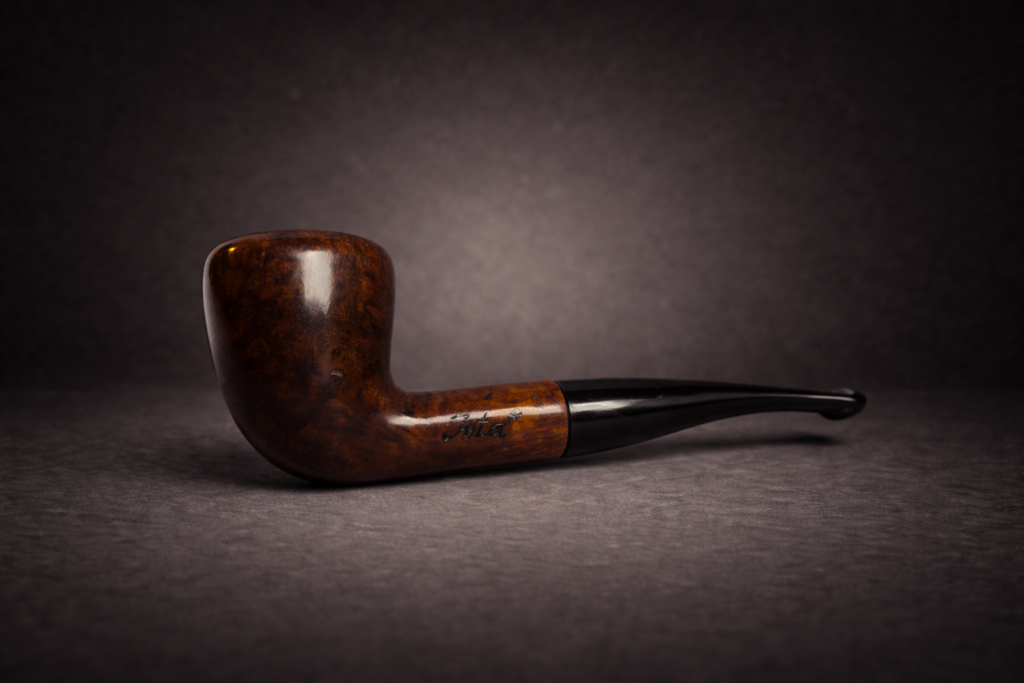
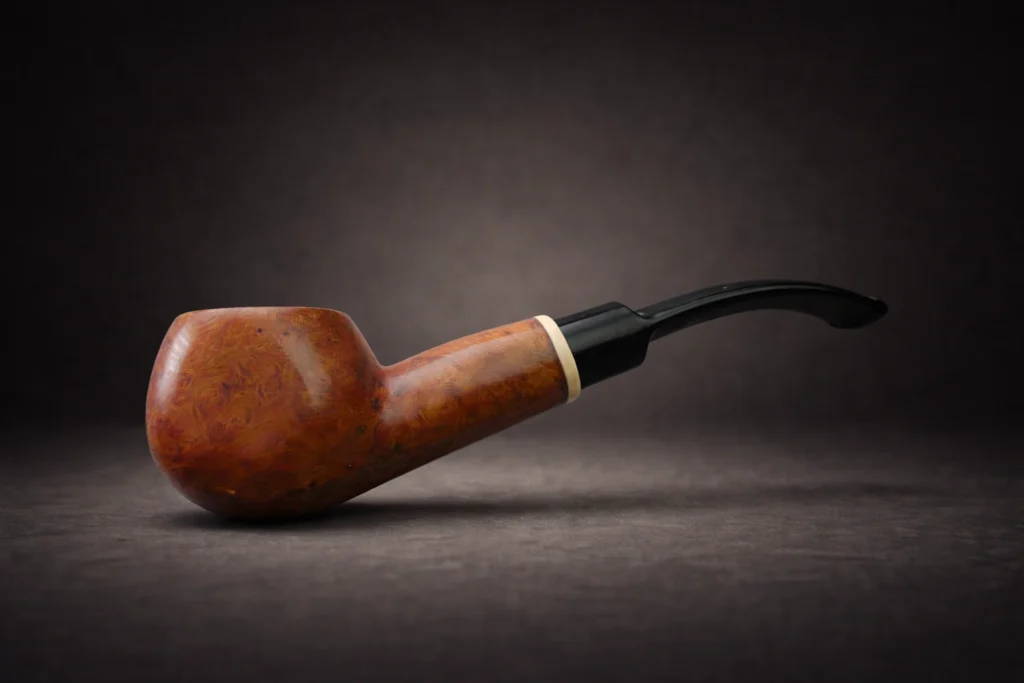
A nosewarmer is usually a shorter pipe, often compact and light, of such a length that when held it sits closer to the face than a standard model. The name sounds almost playful, but it points directly to that proximity. The point is not that the pipe warms the nose, but that it is short, practical, and ready for a session that does not ask for half an afternoon.
Of course, there is no strict measurement after which a pipe suddenly becomes a nosewarmer. As with many pipe terms, character matters more than mathematics. We are talking about pipes that are shorter overall, often easier to carry, and naturally linked to shorter fills or shorter windows of smoking time.
Why small pipes appeal to so many smokers
The first advantage of a small pipe is not philosophical but plain practicality. It fits more easily into a jacket pocket, is easier to carry on a short walk, sits more lightly in the hand, and often puts less strain on the teeth if someone likes to clench. At a time when many people do not always have the luxury of long, quiet sessions, the small pipe feels like a tool that understands real life.
But there is another advantage as well: a psychological one. A large pipe can demand commitment. A small pipe says: you have twenty or thirty minutes, and that is enough. For many smokers that modest sense of measure is its greatest virtue.
A short session does not have to mean a poorer session
One common prejudice is that a small pipe must automatically offer a lesser experience. That is not true. A smaller bowl and shorter duration do not automatically mean less pleasure. Sometimes they mean precisely the opposite: a more focused, more concentrated, and more easily integrated smoking moment.
This is especially true on days when you do not have the time or desire for a long session, yet still want a calm and complete experience. In such moments a small pipe is not a compromise of necessity, but an honest format suited to real conditions. It does not imitate a long session. It offers its own.
Where small pipes have their limits
Everything practical has its price. With small pipes that price is usually not quality but range. A smaller chamber often means shorter duration, and sometimes a lower tolerance for careless pace. If a smoker rushes, a small pipe may reveal that more quickly through heat and roughness than a larger pipe with more mass and more room.
There is also the matter of expectation. If you want a long, layered journey through a blend that unfolds slowly and deeply, a small pipe may not be your first choice. Not because it lacks worth, but because its format is naturally closer to a summary than to a novel.
Are small pipes automatically hotter?
This is one of the most common questions and one of the worst places for oversimplification. A short pipe does indeed give smoke less distance before it reaches the mouth, and less mass may reveal the consequences of fast smoking more quickly. But it does not follow from that that every small pipe must necessarily smoke hot or unpleasantly.
In practice much depends on bowl size, wall thickness, airway geometry, and above all on pace. If you smoke a well-packed small pipe calmly, the experience can be entirely pleasant and controlled. If you smoke nervously, a small pipe will simply expose that sooner. In other words, small pipes are not to blame for being honest.
Who small pipes especially suit
They suit smokers who know that daily life is not built around long rituals. They suit people who want one tidy, shorter session during a break, a walk, or an evening pause. They also suit those who enjoy light pipes and less burden in the hand or between the teeth.
They can also be excellent for tasting blends when you do not want to commit immediately to a long bowl. A small pipe gives a concentrated sample of experience. It does not say everything, but it often says enough to form a meaningful first impression.
Who may prefer something else
If you love long, slow sessions in which a blend develops through many phases, a standard or larger pipe will likely give you more room. The same applies if you value a sense of greater mass in the hand or if a small chamber simply feels too brief to relax you.
Some smokers simply do not like that closer, more compact sensation. Not every preference is a matter of habit; part of it is temperament. A small pipe should not be judged as though it were a poor large pipe. It should be judged for what it is: a special tool for a special rhythm.
How to choose your first nosewarmer intelligently
If you are buying your first nosewarmer or similar small pipe, do not look only at total length. Bowl size, wall thickness, weight, and how the pipe sits in the hand matter as well. A good small pipe should feel balanced, not cramped. If it looks as though everything has simply been squeezed into too little space, it will probably offer neither comfort nor harmony.
For a beginning it makes sense to choose a model that is light but not too thin, with a bowl that is neither miniature nor too wide. A small pipe should feel practical, not nervous. If it forces you to approach it more cautiously than you want, the format may not be the right one for you.
Which tobacco styles make the most sense in them
There is no absolute rule here, but in general small pipes often carry blends nicely when those blends do not require a full hour to show their character. Various Burley profiles, milder aromatics, and other tobaccos comfortable in a shorter format often work well. On the other hand, some more complex or slowly developing blends may gain more space for their story in a larger chamber.
This, of course, is not a prohibition but an orientation. As always in pipes, the matter finally comes down to the meeting point of technique, expectation, and personal taste.
A small pipe makes sense when you do not ask it to be everything
Perhaps that is the best way to understand the format. Small pipes and nosewarmers are not meant to replace every other pipe and every other kind of session. They matter precisely because they offer something definite: lightness, brevity, simplicity, and everyday practicality.
If you ask them to be miniature versions of a long ceremonial session, you may feel shortchanged. But if you take them for what they are — small, serious companions for moments when time is not large but the desire still is — they may become some of the smartest pipes you own.