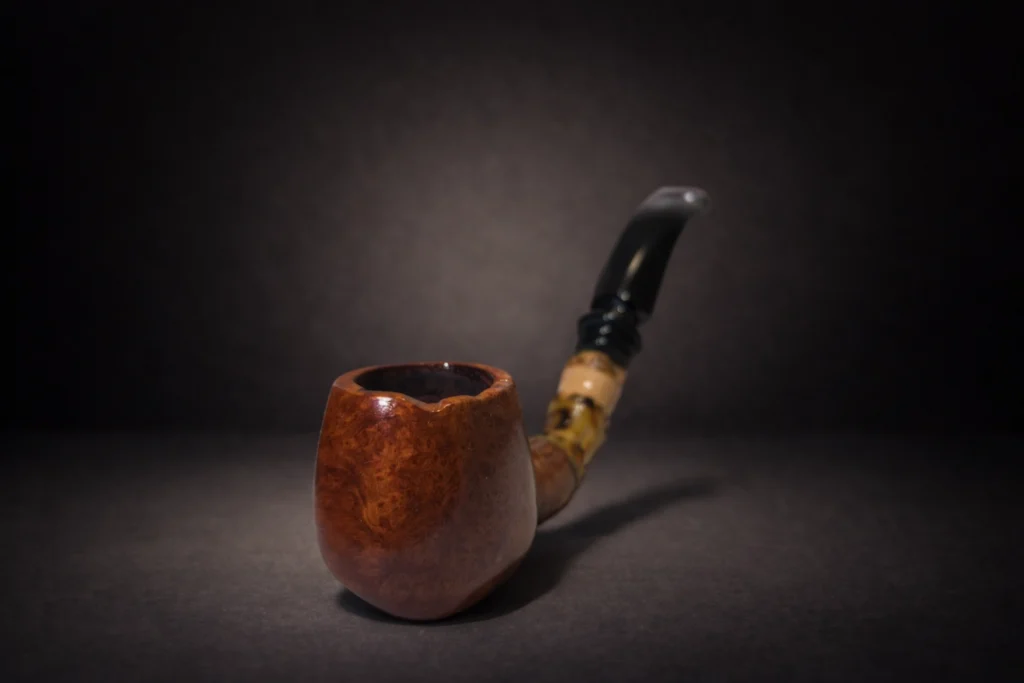
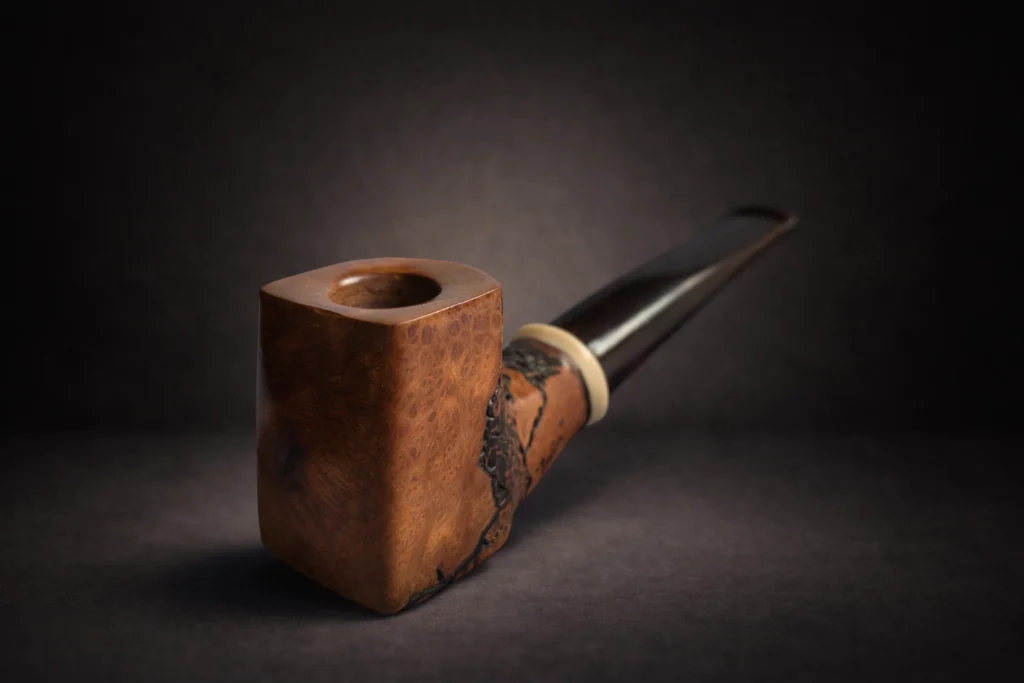
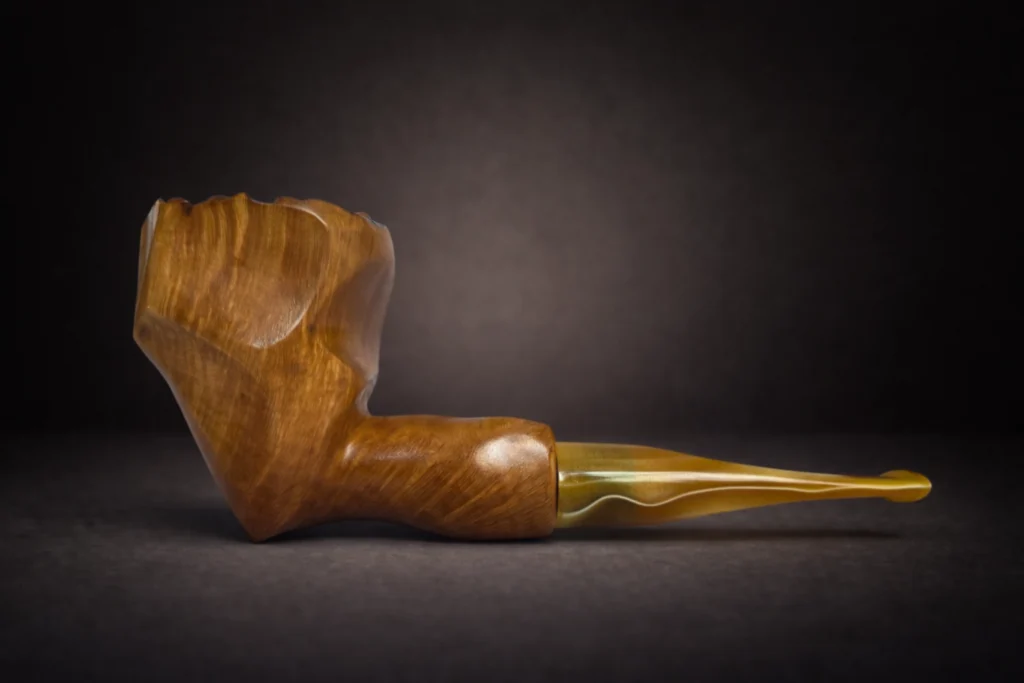
How to Tell Whether a Pipe Was Made for the Display Case or for Real Smoking
Some pipes seem to ask for the eye. Others seem to ask for the hand. Of course, the best pieces can do both, but not every visually striking pipe is automatically convincing as an object meant for regular or serious smoking. That is why it helps to learn the difference between aesthetic impression and smoking logic. Not so that you value beauty less, but so that you better understand when an object was made primarily to be admired and when it truly shows signs of having been conceived as a tool meant to live in the hand, between the teeth, and through many bowls of tobacco.
A beautiful pipe and a strong smoking pipe are not the same sentence
There are moments when you see a pipe and immediately think: this is a piece made to be looked at. The line is dramatic, the grain striking, the finish eye-catching, and the object carries that kind of presence that almost asks for a display case or at least a little silence around it. There is nothing wrong with that. Aesthetic power is not a flaw. It is part of why many people love pipes in the first place.
But aesthetic power and smoking conviction are not the same thing. A pipe can look extraordinary while still asking for more compromises in the hand, at the stem, or in actual use than a buyer may want. That is why it helps to look at a pipe in two ways at once: as a form that speaks to the eye, and as a tool that must pass the much stricter test of real smoking.
The first sign: proportions, not just impression
With a display-oriented pipe, the eye is often caught first by character. With a pipe intended for smoking, the eye should also be able to find proportion. That does not mean the pipe must be modest or visually quiet. It only means that the proportions should feel as though they serve something beyond effect. A very large bowl, an exaggerated line, or an unusual silhouette are not problems in themselves, but it is worth asking what those decisions do to balance, weight, and use.
A good smoking pipe usually does not feel as though everything has been arranged for a single photograph. It feels as though there is a logic that can survive time, the hand, and repeated smoking. Sometimes that logic is quiet. That is often precisely why it is valuable.
Balance reveals more than dramatic form
One of the best ways to judge whether a pipe leans toward display or toward real life is to think about balance. Even if you cannot hold it, you can often sense the distribution of mass in the relationship between bowl, shank, and stem. Does the pipe feel as though its center of gravity was considered, or as though all the energy went into making the shape visually memorable? Does the stem look convincing enough to carry the rest of the pipe, or does it seem merely to follow the spectacle of the bowl?
Balance is not a glamorous criterion, but it is one of the fairest. A pipe that truly lives well in the hand usually radiates a kind of inward calm, even when it is visually strong. A pipe built primarily for effect often radiates a tension that looks exciting in a picture but may become tiring in real use.
Stem and clench: where the truth reveals itself quickly
Much of what seems persuasive in a photograph becomes less persuasive when the pipe must actually be held between the teeth or carried for a longer time. That is why stem and clench often reveal very quickly whether an object is merely visually impressive or genuinely smoking-minded as well. If the stem seems like an afterthought attached to a spectacular bowl, caution is wise. If it looks as though the same level of care was invested in it as in the rest of the pipe, that is a better sign.
A good smoking pipe does not necessarily need to be perfect for clenching, but it should not give the impression that the experience was entirely outside the maker’s concern. An object meant to live with a smoker usually shows at least some consideration for the mouth, the teeth, and the hand. An object meant mainly to impress sometimes leaves those things in the background.
Chamber and drilling: the real smoking logic is hidden inside
The strongest sign that a pipe is not merely for display often does not come from the outside, but from the logic within. What is the chamber like? Does it seem thought through for actual smoking rhythm, or does it merely follow the external silhouette? Does the pipe feel as though the drilling was executed so that the object would work well, rather than simply so that it would technically be possible?
This matters because some pipes look as though the exterior made all the decisions and the interior was forced to adapt afterward. In a serious smoking pipe, the impression should be the opposite, or at least balanced: form and function feel as though they negotiated with one another, not as though one completely overruled the other.
Finish can mislead, but it can also support
A spectacular finish is not proof that a pipe belongs in a display case, just as a quieter finish is not automatic proof of serious smoking intention. The issue is not beauty, but hierarchy. If the finish feels like the object’s main argument while everything else remains vague, the buyer should slow down. If the finish is only one layer in a pipe that otherwise feels coherent, then beauty is doing its proper work without stealing the job of everything else.
A good finish can even support the smoking identity of a pipe. It can strengthen character, support the shape, and give the object visual fullness without turning it into a trophy afraid of touch. The best pipes usually do not choose between impression and use. They simply know which of those things belongs where.
When “display case” is not a flaw
It is also worth saying something often forgotten: there is nothing wrong with wanting a pipe that is more an object of contemplation than a daily worker. Some collectors want exactly that. Some pipes have artistic or collectible value that does not need to be measured by the number of bowls smoked through them. Trouble only begins when the buyer thinks he is buying one kind of object and ends up with another.
In other words, a display pipe is not a bad pipe. Only an unclear purchase is bad. If you want a piece with strong aesthetic presence and you accept that it may ask for more care, more gentleness, or more compromise in use, that can be a perfectly legitimate decision. It is simply better to know that is what you are doing.
The best pipes do not need to choose between the eye and the hand
In the end, the best outcome is not a choice between a beautiful pipe and a functional one. The best outcome is a pipe capable of carrying visual character while remaining convincing in smoking. Such pipes do exist. And they are often recognizable because nothing in them feels as though it was sacrificed merely for a photograph. The line has life, but does not destroy proportion. The finish has presence, but does not hide the essentials. Stem and balance speak as seriously as the bowl does.
When you see that, you often feel the difference before you can fully explain it. What stands before you is neither merely a display object nor merely a tool without spirit. It is a pipe that understands that real value does not arise from choosing between beauty and use, but from their convincing peace with one another.