How to Choose Your First Pipe If a Light Clench Matters to You
Some beginners realize very quickly that it matters to them how a pipe sits between the teeth. They do not want a piece that constantly demands the hand, they do not want jaw tension, and they do not want every session to become a small conflict between the beauty of the object and discomfort in the mouth. That is why a light clench is not a minor detail, but a perfectly legitimate criterion when choosing a first pipe. But a light clench does not depend only on the stem. It is shaped by weight, balance, mass distribution, length, and the overall feeling of tension or ease that the pipe creates. This article helps beginners avoid buying only by impression and understand what actually makes a pipe more suitable for a calm and easy clench.
Why a light clench is a completely legitimate beginner criterion
Beginners sometimes think the question of clenching is too detailed or too “advanced” for a first pipe. As though they should first simply buy a pipe they like, and only later think about how it sits between the teeth. But for many people, that is one of the first truly practical questions. If it matters to you that a pipe can rest lightly and calmly in the mouth, that is not fussiness. It is a real need.
In fact, ignoring that need often leads to unnecessary disappointment. A beginner buys a pipe that looks excellent, but after only a few sessions begins to feel jaw tension, the need to return the pipe to the hand, or a general sense that the stem and weight do not create a calm relationship. It is much healthier to admit from the beginning what matters to you than to pretend later that the discomfort was never real.
A light clench is not only about the stem
It is very easy to reduce everything to the stem, because that is the part that physically enters the mouth and creates the first impression of comfort or discomfort. But a good clench does not come from one detail alone. It depends on the whole pipe. Weight, balance, mass distribution, length, and the overall feeling of whether the pipe pulls downward or sits more peacefully often matter just as much as the form of the stem itself.
This is important because beginners easily assume that an elegant stem will solve the whole matter. Then they buy a pipe with a refined stem but too much bowl mass or too much general heaviness for the jaw to relax around it. If clench matters to you, you need to read the pipe as a whole, not just the part that touches your teeth.
What most affects an easy clench in practice
The overall weight of the pipe
Weight is very often the first real criterion. Even a beautifully balanced pipe can become tiring if it is simply too heavy for the kind of clench you want.
Balance and mass distribution
It is not all about grams. Some pipes feel lighter than they are because the mass sits more naturally. Others feel more tiring even without being especially heavy because the weight pulls in the wrong way.
The stem and the feeling between the teeth
The stem still matters, but as part of the whole. If it feels natural between the teeth, that is a good sign. If the rest of the pipe works against that feeling, then the stem alone will not be enough.
Why beginners easily buy a pipe that looks like a good clencher but is not
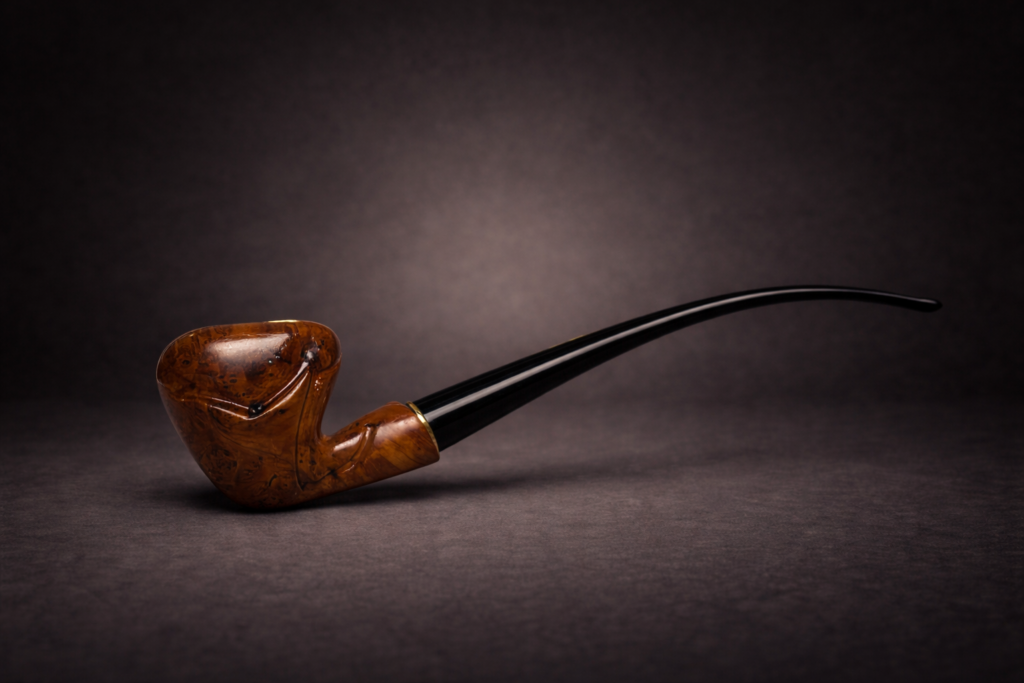
In photographs or in general impression, some pipes look as though they should be perfect for easy clenching. They appear elegant, calm, and effortlessly wearable. But the eye does not feel what the jaw will later feel. That is why a beginner can easily buy a shape that seems like a natural clencher, only to discover later that it constantly needs support or that it quietly forces more pressure than desired.
This is why it helps not to trust silhouette alone. If clench matters to you, then weight, proportions, and the overall relationship of the piece matter as much as the visual promise. Not because the purchase needs to become a laboratory exercise, but because a beautiful impression should not be allowed to dominate the whole choice.
When light clench should genuinely be a priority
Not everyone needs the same thing. Some people hold the pipe in the hand most of the time and use clench only occasionally. Others naturally want the pipe to rest in the mouth for long stretches of the session. For the second group, light clench is not a bonus. It is one of the key buying criteria. If you already know you belong closer to that habit, it makes no sense to choose as though it were irrelevant.
That kind of realism helps enormously. A beginner does not need to pretend to be universal. The more clearly you understand how you want to hold the pipe, the healthier your first choice becomes.
How not to turn clench into the only thing that matters
There is another extreme as well: reducing the whole decision to whether the pipe can hang between the teeth. That is not ideal either. A first pipe does not need to become only a clench machine. It still has to fit the routine, the likely session length, the general feel of the pipe, and what the smoker wants from the experience.
That is why clench is best treated as an important filter, not the only truth. If it matters greatly to you, let it guide the decision. Just do not let it blind you to the rest of what makes a good first pipe.
What a beginner can do before buying
If you are buying in person, it is worth paying serious attention not only to how the pipe looks in the hand but also to how it feels when briefly and carefully placed between the teeth. There is no need to make a ceremony of it, but the body often gives a quick answer as to whether the pipe feels natural or asks for unnecessary tension. If you are buying online, then weight, proportions, and an honest experience-based description matter even more than usual.
A very useful question is this: do I want a light clench because it is truly part of how I will smoke, or because I imagine that a pipe ought to live in the mouth most of the time? That question often separates real need from fantasy.
The most common mistakes when clench matters
Choosing only by a thinner stem
A thinner or more elegant stem can help, but it does not solve the weight and balance of the whole pipe.
Assuming an elegant silhouette means easy wearability
The eye easily believes in elegance, but the jaw later checks the truth.
Ignoring your actual holding habit
If you know you will mostly hold the pipe in the hand, clench may matter, but it may not be the main criterion. If you know clench matters for a large part of the session, then it should play a larger role in the purchase.
A good first clenching pipe is not necessarily the one that looks most refined
Beginners easily assume that the best clench will come from a pipe that looks especially elegant or slim. But a good pipe for easy clenching usually comes much more from the relationship between weight, balance, and stem than from any single visual cue. It is wiser to look for a pipe that feels calm as a whole than for one that promises comfort through a single detail.
Once you understand that, the choice becomes much healthier. You are no longer buying only the image of a light pipe. You are choosing a piece that can genuinely give you a calmer and more natural relationship with clenching. And if that matters to you from the beginning, then it is more than enough reason to choose with it in mind.