How to Read a Pipe’s Finish from a Photo Before Buying
Online pipe buying often looks simpler to beginners than it really is. The photo is neat, the color attractive, the shine feels luxurious, and it becomes easy to think you already “see” enough. In reality, finish is exactly where a photograph can be both the most helpful clue and the greatest trap: it can help you recognize the character of the pipe, but it can just as easily make you confuse a beautiful presentation with a good finish. That is why this article does not try to teach readers how to diagnose everything from one image. Its goal is more realistic and more useful: to show what can genuinely be noticed in a photograph, what cannot be known without asking, and how to look at finish so that you do not end up buying only a glossy image instead of an object whose surface and character you understand at least a little before it reaches your hand.
Why a photograph helps and misleads at the same time
When buying pipes online, the photograph quickly becomes the main source of trust. You look at color, grain, shine, and overall impression, and within seconds you feel as though you understand what you are seeing. That is perfectly natural. Most people buy first with the eyes and only then with the mind. The problem is that finish is exactly where a photo can be both the most useful clue and the greatest trap.
A good image can reveal quite a lot: whether the surface feels natural, whether it has depth, whether the briar seems alive or covered by one dominant layer of visual effect. But that same image can also mislead. Lighting, angle, editing, and the seller’s desire to make the pipe attractive can turn the finish into something that feels more convincing than it really is.
That is why the first healthy lesson is simple: a photograph is not a verdict. It is only the beginning of reading.
What stain, wax, and varnish mean in the simplest sense
A beginner does not need to enter deep restoration or pipe-making language, but a basic distinction helps. Stain is color or toning that helps shape the appearance of the surface and emphasize or direct the visual character of the briar. Wax is a finishing layer that often gives protection and a more natural, pleasing sheen. Varnish, or a harder coating, creates a different kind of surface impression, often more closed and more fully sealed in appearance.
In practice, that means two pipes can both appear shiny while telling different stories. One may feel like briar still breathing through color and wax. Another may seem as though more finish sits between you and the wood. A photograph will not always make that distinction obvious, but sometimes it gives enough clues to justify caution or a follow-up question.
What a photograph can genuinely show
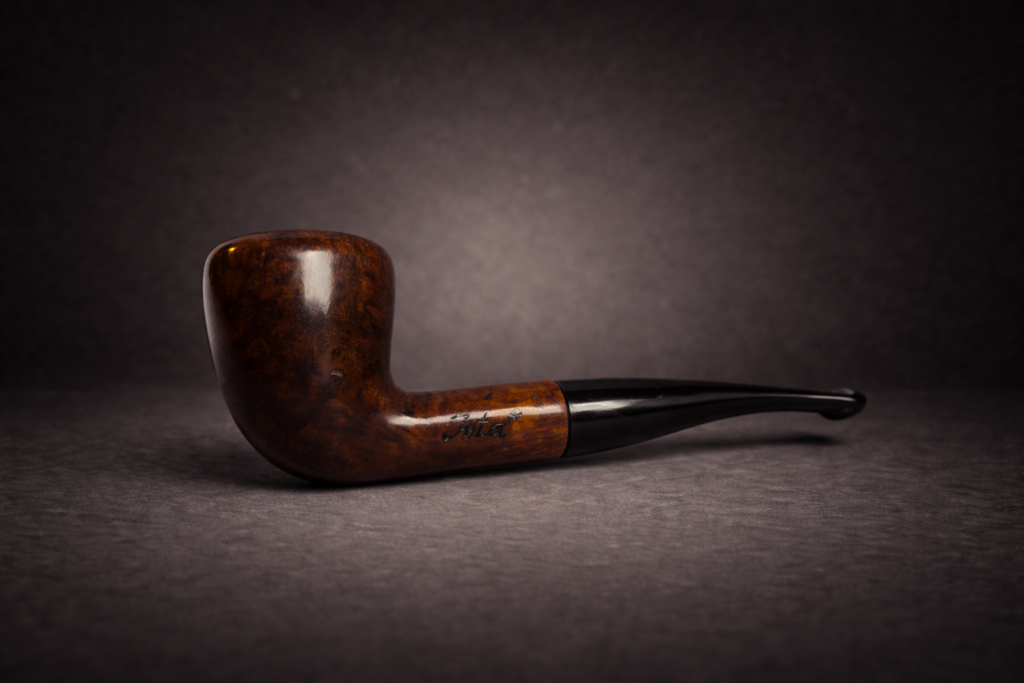
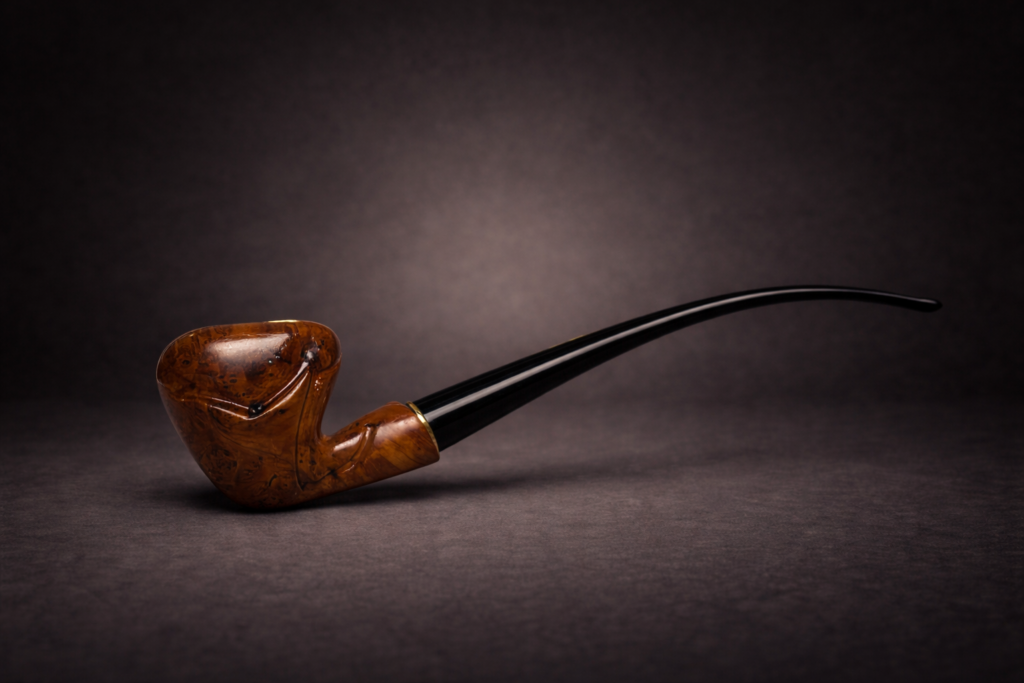
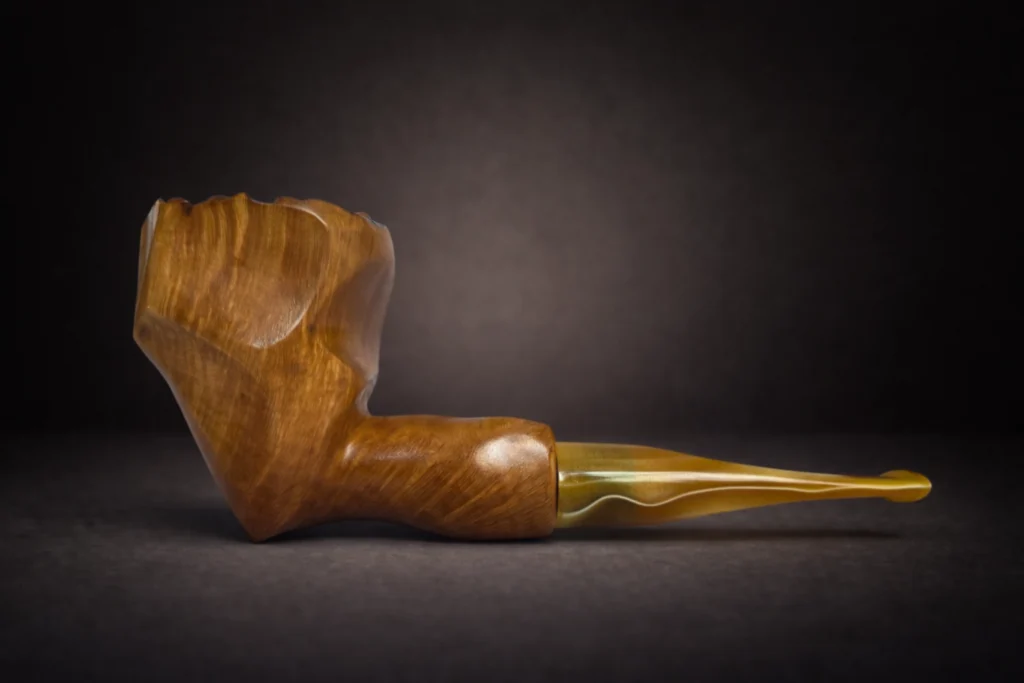
You can see more than beginners often think, but less than they would like. In a good photo, it is often possible to sense how the surface reacts to light. Does the grain look deep and natural, or as though it lies under glass? Is the shine soft and Warm, or hard and uniform? Does the wood’s surface still seem present, or is the dominant impression purely one of outer coating?
These are useful clues. They do not tell the whole truth, but they tell part of it. If a finish feels too Smooth in a way that erases the sense of wood, that is a signal. If it looks more natural, with deeper and more lively behavior under light, that too is a signal. Neither is an automatic judgment, but both deserve to be noticed.
What a photograph cannot honestly confirm
This is where beginners most often go wrong because they want certainty that the image cannot provide. A photograph cannot always reliably confirm whether the finish is wax, stain plus wax, or a harder coating. It cannot tell you how the surface feels to the touch. It cannot show how the finish behaves under ordinary indoor light rather than under carefully chosen listing photography.
This matters because it is exactly here that confidence can become overconfidence. A smoker sees shine and concludes too much. Or sees a more matte surface and again concludes too much. Both are mistakes. Finish can be suspected from a photo, but not always fully read without more information.
When a finish looks natural, and when it looks too sealed
This is perhaps the most useful visual habit a beginner can develop. Some pipes in photographs look as though the surface still belongs to the wood. You see texture, you see how light moves through the grain, and the shine feels like a finishing touch rather than a dominating layer. People often describe this sort of effect as more natural or more open.
Other pipes look different. The shine is very even, the surface somewhat closed, and the grain seems viewed through a stronger outer layer. That does not automatically mean the pipe is poor or the finish is wrong. But it does mean you should pause and avoid making romantic conclusions simply because the image looks luxurious.
Why high gloss is neither proof of quality nor proof of trouble
Beginners often fall into one of two extremes. They either see gloss and assume the pipe must be finer and better, or they see gloss and immediately suspect something is wrong. Both reactions happen too quickly. High gloss alone proves neither quality nor defect. It is only one impression that has to be placed in context.
The more important question is how that gloss behaves in relation to the texture and character of the surface. Does it feel alive and deep, or hard and flat? Does the pipe look like well-finished wood, or like an object whose coating matters more than the material underneath? Those questions take you much farther than the simple word shiny.
What questions are worth asking the seller
When the photograph leaves uncertainty, the smartest move is not guesswork but questions. It is worth asking how the pipe was finished, whether the surface is stain and wax, whether a harder coating is present, and whether more photographs under different lighting are available. That is not suspicion. It is careful buying.
It is also helpful to ask for closer views of the surface if the listing does not provide them. Especially with smooth pipes, that can reveal more than the usual hero image. If the seller cannot answer clearly or seems entirely uninterested in the finish, that too is useful information.
How not to buy only a pretty photograph
The biggest danger in online pipe buying is not a questionable finish by itself. It is the moment when visual appeal convinces you that you already know enough. At that point, the buyer stops reading clues and starts confirming desire. That is when the photograph wins over judgment.
The smarter path is slower. Look at more than one image. Watch where the light breaks, where the surface looks honest, and where it looks too perfect. Compare multiple listings. Notice whether the finish differs only in color or also in the way the surface seems to breathe. And always leave room for the truth that something can look beautiful and still not be clear enough to buy without asking more.
What is worth remembering in the end
You can learn to read finish in a photograph, but you cannot learn to pass final judgment from one glance. That is the most honest measure. You can recognize hints of a more natural or more sealed look, develop a feel for shine, texture, and depth, and still know where looking ends and questions must begin.
That is not weakness. It is maturity in buying. Because the goal is not to prove that you can read everything from a photo. The goal is much more useful: not to buy only a beautiful image, but to buy a pipe whose finish you understand at least a little before it ever reaches your hand.