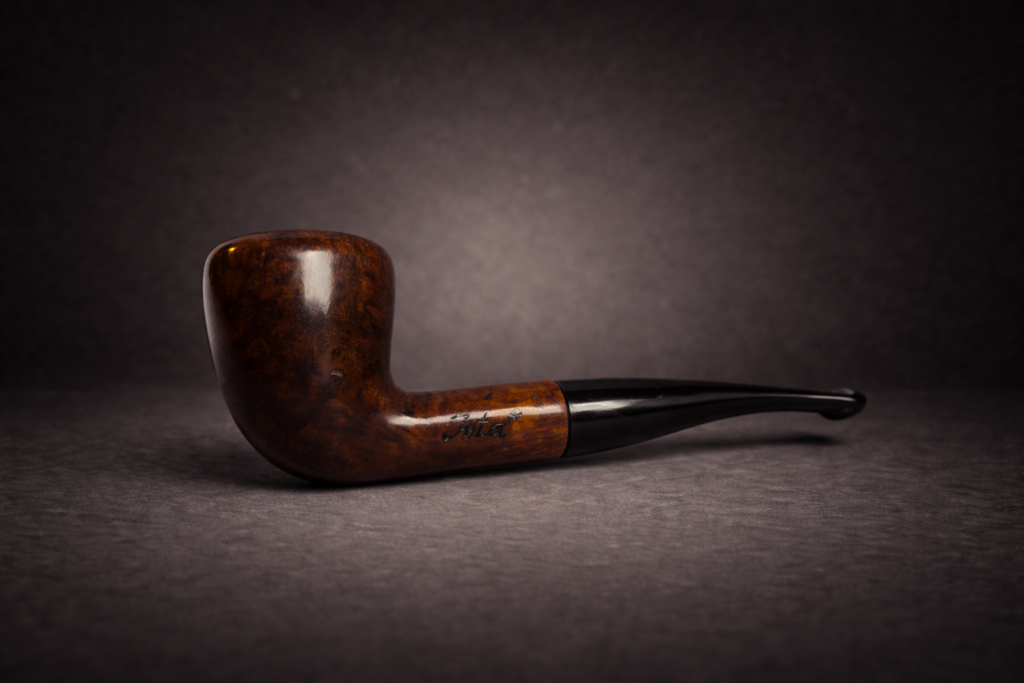
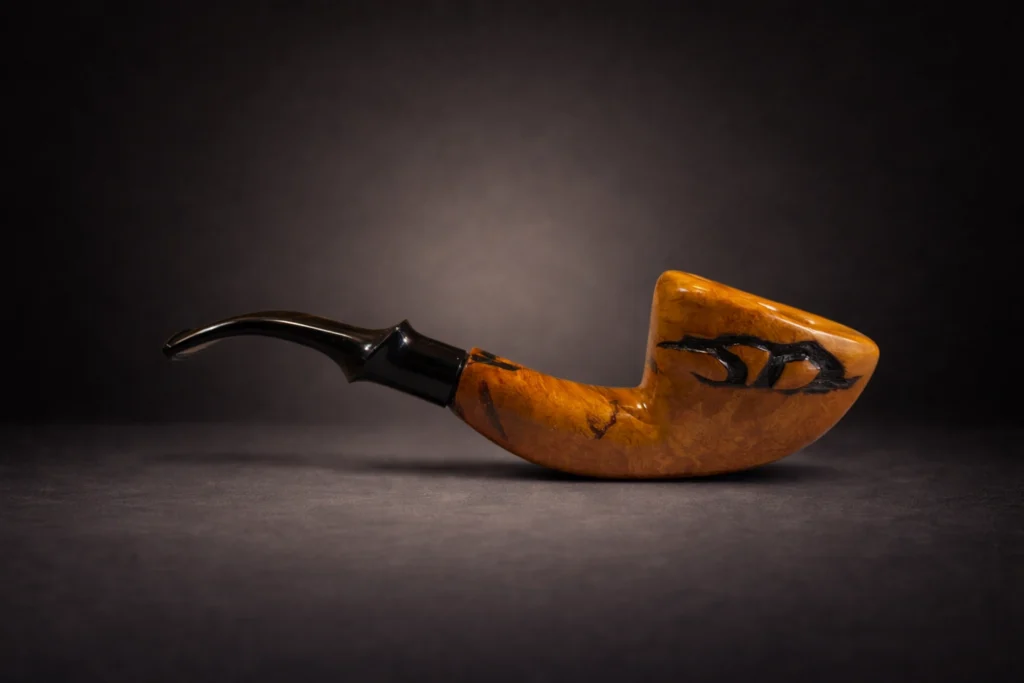
How to Read an Online Pipe Listing and See What Photos Leave Out
Buying a pipe online can be a great opportunity, but also a very expensive lesson if you fall in love with the main photo before looking at what really matters. A good listing does not sell only shape and finish. It gives enough information to judge the bowl, the stem, the fit, and the overall health of the pipe. This guide shows how to read a listing without naïveté and without paranoia. The goal is not to suspect everything, but to learn how to distinguish an honest offer from one that relies on the buyer not asking the right questions.
A beautiful main photo is not the same thing as a good purchase
Buying a pipe online has one major strength and one major weakness. The advantage is obvious: the selection is wider, models are more accessible, and a good piece can be found even when no physical shop or fair is nearby. The weakness is just as obvious, only often forgotten: you do not hold the pipe in your hand. Everything you know comes from someone else’s photos, someone else’s description, and your own ability to read between the lines.
That means an online listing must be viewed differently than a merely attractive object on a screen. You do not ask only whether you like it. You ask: what is this listing showing me, and what might it be avoiding showing me? In that difference lies the boundary between an excellent purchase and an expensive illusion.
A good listing gives information, not only an impression
An honest listing does not try to blind you with one glossy photograph. It gives enough angles, enough detail, and enough clarity of language for you to make a reasonable judgment about the pipe’s true condition. That does not mean it has to look like technical documentation. But it should show that the seller understands what a buyer needs to see.
A listing that relies only on aesthetic impression often hides, or at least neglects, what truly matters: the bowl, the rim, the stem, the fit, and any signs of restoration. In online buying, a pretty finish is not worthless, but it is only the outermost layer of the story.
A photo of the chamber is not an extra but an obligation
If a listing does not show the inside of the chamber, the most important piece of information is missing. The chamber says more than almost anything else: it shows cake, possible signs of burnout, uneven wear, overheating, and the previous owner’s overall treatment of the pipe. The hero shot may be beautiful, but if the chamber is absent, you are buying half blind.
A good chamber photo should be clear enough to show the edge of the chamber wall and the general condition inside. It does not need to be artistic. It only needs to be honest. If the chamber is blurry, too dark, or photographed in a way that reveals very little, that is a reason for another question.
The rim and the stem reveal habits, not only age
The rim shows how the pipe was lit and how much care it received after smoking. Light darkening is no tragedy, but a burned edge, a heavily sanded top, or a local black wound may point to trouble that is not merely cosmetic. If the listing does not include a good photo of the rim, you cannot know whether you are looking at an honest trace of use or an attempt to conceal something.
The stem matters just as much. It reveals oxidation, bite marks, deformation, and sometimes the question of originality. A good listing therefore does not show only the assembled pipe from a distance. It also shows the stem close up, especially the bit area and the joint against the shank. Without that, the listing is incomplete no matter how elegant the side profile looks.
A disassembled pipe says more than an assembled one
One of the most useful photos in any listing is a photo of the pipe taken apart. Only then can you see the tenon, judge the cleanliness of the joint, and suspect whether the stem is original or at least competently fitted. An assembled pipe can look elegant and harmonious while still hiding poor fit or an untidy transition.
If the seller does not provide such a photo, it is entirely reasonable to request one. That is not nitpicking. It is a basic check of the mechanics of an object you are buying without physical inspection.
The language of the listing often says as much as the pictures
People sometimes focus so much on photographs that they forget to read the language of the listing. Yet language often reveals whether a seller is precise, honest, and aware of what is being sold. A description like beautiful pipe, see photos is not information. It merely hands the burden back to you. By contrast, sentences that clearly state the condition of the rim, bowl, stem, and any restoration create much more trust.
Watch also for words that sound strong but mean little without detail: mint, perfect, excellent, professionally restored. None of these is a problem by itself, but each demands clarification. Professionally restored how? What was done? Was the stem polished, newly made, was the rim sanded, was the mortise cleaned? A good listing knows how to answer such questions before you even have to ask them.
Warning signs that should not be ignored
No single detail has to mean a listing is poor. But several signs together deserve caution, especially when combined with an overly confident tone from the seller.
- no photo of the chamber
- no close-up of the stem
- no photo of the pipe disassembled
- very short description with very large claims
- restoration is mentioned without explaining what was done
- dimensions are not given or are extremely vague
- every photo is taken only from flattering angles
Such listings are not automatically fraudulent. But they require more questions and less innocence.
Photos can mislead even when they are not intentionally deceptive
This is an important nuance. Not every poor photograph is an attempt to deceive. Sometimes the seller is simply not a good photographer, does not have good lighting, or does not know what a buyer needs to see. But from the buyer’s point of view that changes little: there is still not enough information. That is why online buying requires the habit of judging not only the seller’s honesty but also the quality of the presentation itself.
A dark photo may hide oxidation. Harsh lighting may soften rim damage. An unnatural angle may conceal wall thickness or make the pipe look larger or smaller than it really is. That is why it is always best to read several photos together, not treat each one as a complete piece of evidence.
Which questions are worth sending before purchase
A good buyer does not look for an excuse to ask questions. Questions are simply the way to close the gaps in the listing. A few short messages are often worth far more than ten minutes of guessing.
- Could you send a top-down photo of the chamber?
- Is the stem original?
- Has the pipe been restored, and what exactly was done?
- Are there cracks, burnout, or soft spots in the chamber?
- Could you send a photo of the pipe disassembled?
- Is the airway completely open?
The tone of the reply matters as well. A precise, calm, substantial answer is often worth more than the simple words yes or no.
Do not buy only by price and brand
A respected brand name and a tempting price can easily cloud judgment. People tell themselves: good brand, fair price, I cannot miss this chance. But a good brand does not mean every individual example is in good condition. Just as a high price is not proof of quality, but sometimes only proof of someone else’s optimism.
Online buying requires you to separate three things: what the brand means in principle, what this specific pipe actually shows in the listing, and whether the asking price is reasonable for this exact piece. Only when those three lines align does the purchase begin to smell like a sound decision.
When the best choice is simply to skip the listing
Sometimes the best purchase is the one you did not make. If the seller answers vaguely, if additional photos never come, if the important details of chamber and fit remain persistently out of focus, or if the description sounds as though it is selling a story rather than an object, there is no reason to persuade yourself that everything is probably fine. There will be other listings.
In online buying, the greatest enemy is not caution but impatience. Once you learn to skip a questionable listing without the feeling that fate has slipped away, you begin to buy more calmly and more wisely.
A good listing does not have to be perfect, but it must be honest
In the end, an honest listing does not need to be studio-photographed or elegantly written. It only needs to show what a buyer must see and avoid hiding important questions behind a pleasing impression. Chamber, rim, stem, fit, dimensions, and a candid description — that is the skeleton of trust.
Once you begin to read listings this way, online pipe buying stops being a game of impressions and becomes a skill. And that skill does not mean suspecting everyone. It means knowing where to look before the money starts moving toward a pipe you have known only through a screen.