Hand-Cut Stem vs Factory Stem: Where the Difference Is Really Felt
Many buyers notice shape, grain, and finish first, while the stem remains in the background. Yet the stem is often where the difference is felt fastest between a pipe that merely looks good and a pipe that truly settles into the hand, the teeth, and the smoke. The difference between a hand-cut stem and a factory stem is not always a spectacle visible at first glance. More often, it lives in a series of smaller things: thickness in the right place, the feel of the button, the precision of the transitions, the geometry of the airway, and the sense that the pipe has been finished as a real tool rather than merely assembled as a product.
Why the stem deserves more attention than it usually gets
With a pipe, it is easy to fall in love with what appears first to the eye. Shape, grain, finish, and general character draw attention quickly. The stem often seems secondary, almost like a final attachment that simply connects appearance and function. In reality, the stem is one of the places where quality is felt very quickly, even before a smoker has the language to explain why.
The stem is not merely the part through which smoke reaches the mouth. It determines how the pipe sits between the teeth, how comfortable it feels in a clench, what kind of resistance the smoker experiences, and how complete the whole object feels in use. In a good pipe, the stem is not an afterthought. It is part of the design from the beginning. When it is done well, the smoker senses that before being able to fully name it.
What is actually meant by a hand-cut stem
The phrase hand-cut is often used as a sign of higher class, but it helps to bring it down to earth. A hand-cut stem is not valuable simply because it sounds artisanal. It matters because it allows a different level of shaping and refinement. When a stem is cut and finished by hand with real care, the maker can control its thickness, taper, button, transition into the shank, and the inner geometry of the airway much more precisely.
That does not mean every hand-cut stem is excellent. As with anything handmade, the value does not come from the fact of handwork alone, but from skill and judgment. Still, a good hand-cut stem makes possible what a factory stem often handles through compromise: finishing a particular pipe as an individual object rather than pairing it with a general-purpose component made to fit a broader production logic.
What a factory stem usually does differently
Factory stems are not automatically bad. Many pipes with factory stems are perfectly decent, and some are very comfortable. The issue is not that they are factory-made, but that they often emerge from a system built around repetition and speed. That usually brings more compromise in thickness, button shape, feel between the teeth, and sometimes in the internal geometry of the airway.
In other words, a factory stem often has to be good enough for many situations. A hand-cut stem can be made to suit this particular pipe. That is why the difference is not always dramatic in a photograph, but often becomes very real in use. It is the difference between something that functions and something that feels naturally right.
Where the difference is felt first: between the teeth and at the button
One of the first places where the difference reveals itself is the button, the small end of the stem that many beginners barely notice. Yet that detail says a great deal about the feel of a pipe. A button that is too thick, too rough, or poorly formed can make a stem tiring, especially if you like to clench. Too much material in the wrong place leads quickly to fatigue. Too little refinement gives the impression of incompleteness.
With a good hand-cut stem, the button usually feels quieter. It does not call attention to itself, but it does exactly what it should. It sits comfortably, avoids unnecessary pressure, and does not force constant adjustment. That is not a small matter. It often determines whether the pipe remains merely attractive in the hand or becomes one you genuinely want to return to.
Thickness and taper: small measurements, large consequences
A stem can be visually elegant and still feel awkward. That often happens when the buyer sees only color, polish, or general line, but not the way the stem behaves in its transitions. Thickness at the bit, taper toward the button, and the relation to the rest of the pipe all determine whether the object feels light, balanced, and natural.
A good hand-cut stem usually shows more intelligence in precisely these transitions. There is no extra material where it becomes clumsy, and no excessive thinning done merely for the look of delicacy. With a factory stem, one more often senses that the geometry was set by production compromise. With a hand-cut or carefully hand-finished stem, one feels that someone was thinking about the mouth, the teeth, and real use, not only about a neat final appearance.
Internal geometry: what cannot be seen but can be smoked
The outer form of the stem matters, but the internal path of the air often shapes the experience even more. If the airway transition is not handled well, if the smoke path narrows or changes awkwardly, the pipe may feel more resistant and less graceful in use. Many smokers experience that as effort, even if they cannot immediately explain it in technical terms.
This is where one of the real values of the hand-cut approach often lives. When the maker controls the whole, the stem is not just an outer line but an inner continuation of the pipe’s logic. Smoke then moves not merely through a piece of material, but through a pathway that has actually been shaped with intent. More experienced smokers often recognize that difference within only a few sessions.
Why hand-cut does not automatically mean better
It is only fair to say this plainly: the label hand-cut is not a guarantee of excellence. A badly executed handmade stem can still be a poor stem. It may be too thick, uncomfortable, too sharp at the button, or imprecise at the junction. Handwork is not magic. It is a possibility. Its value depends on the quality of the hand behind it.
That matters because the market loves short formulas. Hand-cut can easily sound like the whole matter has already been settled. It has not. But when it is truly well done, a hand-cut stem often reveals exactly what a higher level of pipe should reveal: more attention, better proportion, and fewer compromises where the smoker feels them fastest.
How a buyer can look at a stem more intelligently before buying
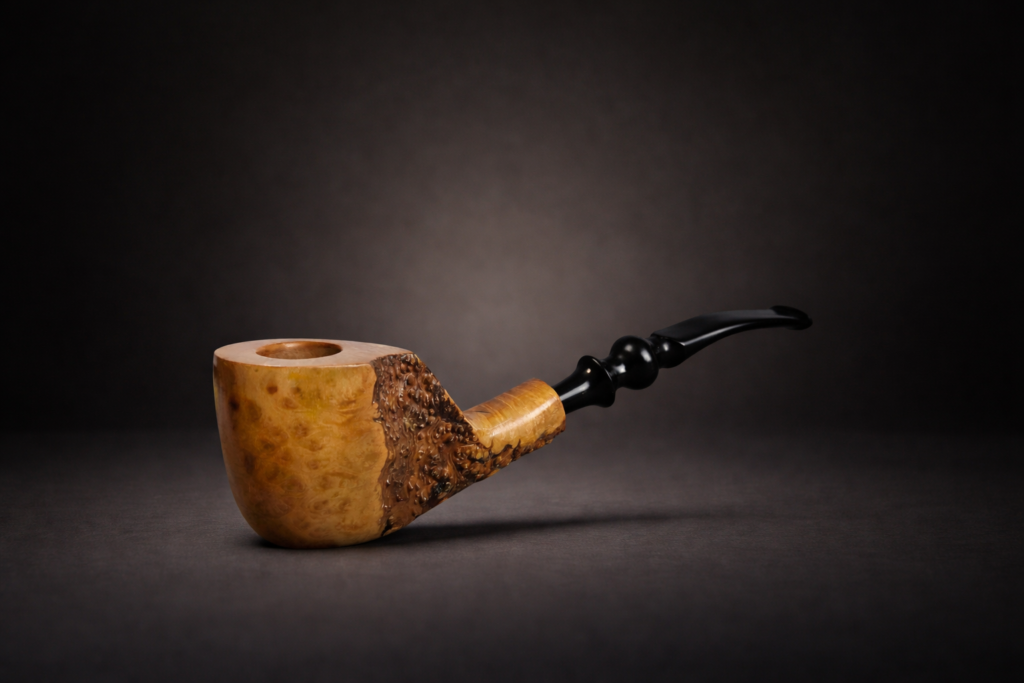
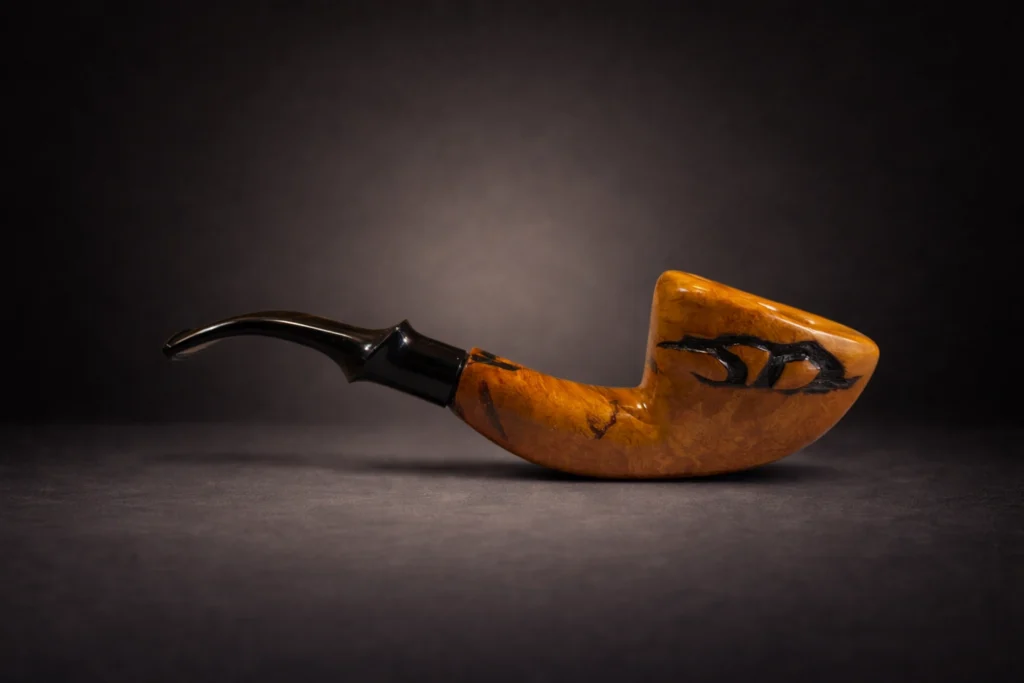
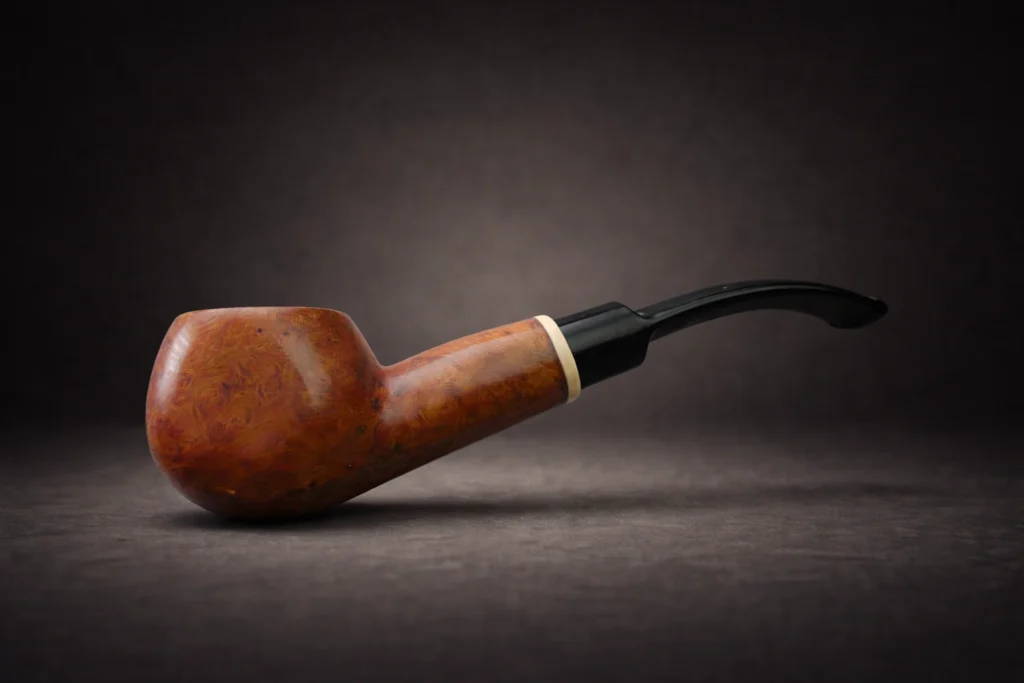
You do not need to become obsessive to judge a stem more intelligently. A few habits are enough. Look for side photographs and, if possible, close-up views of the bit. Ask whether the taper looks natural or heavy. Notice whether the button appears like a precise ending or a blunt stop. Also look at the stem in relation to the rest of the pipe: does it feel like an organic continuation or like an attachment that simply fits?
If you can ask the maker or seller, ask simply and clearly. Is the stem fully hand-cut or only hand-finished? How does it feel in a clench? How is the button shaped? Sometimes one concise answer is enough to reveal whether the stem was treated as a crucial part of the pipe or merely as necessary equipment.
The real difference is not in the label, but in the feel
In the end, the difference between a hand-cut stem and a factory stem is not about prestige for its own sake. It is about how much attention lives at the point where the pipe meets the smoker most directly. Where the object touches the teeth and lips, where smoke becomes a real experience, compromises are felt faster than almost anywhere else on the pipe.
That is why the stem deserves serious attention. Not so that every purchase becomes an examination, but so that you can see where quality often hides. Sometimes it is not in the grain, not in the finish, and not in big language. Sometimes it lives in the thin, quiet precision of a part that looks like a detail in a photograph and turns out to decide almost everything in use.