Good Pipe Engineering: What You Are Actually Looking At When You Say a Pipe Smokes Well
Many smokers can feel that one pipe “works better” than another, but far fewer can explain why. That impression is shaped not only by material or outer form, but by the very concrete relationship between the chamber, the draft hole, the airway, and the stem connection. This article translates the abstract idea of “good engineering” into things a buyer can understand and, at least to some extent, check before buying or while using a pipe.
“Smokes well” is not magic, but construction
In the world of pipes one sentence is heard again and again: this pipe smokes well. It sounds simple, almost like a matter of taste. But behind that sentence there is usually something very concrete. A good pipe does not have to be only beautiful, expensive, or made by a famous name. It needs internal order.
That internal order is called, somewhat dryly, engineering. Yet there is nothing cold about it. Good engineering means that smoke and air move through the pipe in a sensible way, without unnecessary obstacles, dead spots, or rough transitions. In other words, the pipe has been thought through from the inside.
Chamber and draft hole: two openings that decide more than you can see
At the most basic level, a pipe has a chamber for tobacco and a channel through which smoke travels toward the stem. That sounds obvious, but the relationship between those two points forms the foundation of the pipe’s behavior. If the draft hole arrives in a sensible place, supports a clean flow, and does not create unnecessary dead zones, the smoke becomes more predictable and cleaner.
When that relationship is poor, small annoyances begin to appear long before a smoker knows how to name them: odd resistance, wetter performance, irregular burning, more effort than the pipe should demand.
The airway: what you do not see, but always feel
Many buyers look at grain, color, finish, and shape. Few think first about the airway. Yet that is the path along which smoke either lives or struggles. If the channel is too narrow, rough, poorly finished, or full of transitions that create turbulence, a pipe can feel nervous and messy even when everything else seems in order.
A good pipe does not need to be spectacular on the inside. It needs to be calm. The airway should not fight the smoke. It should guide it without drama.
The stem and shank junction: a small zone with large consequences
Mortise and tenon may sound like something from a woodworking shop, but in pipes they describe a junction that can greatly affect the way a pipe works. If the stem does not fit well, if the internal transitions are rough, or if there is an obvious mismatch in the channel, the smoke feels it before you do.
This is sometimes where whistling, condensation, or an unusually hard draw begins. Everything may look tidy from the outside. Inside, however, one poor junction can do a great deal of damage.
What a buyer can check without a laboratory
- Feel of the draw: if the pull is oddly restrictive for no clear reason, caution is wise.
- Cleaner passage: a pipe that accepts a cleaner smoothly often reveals sensible internal construction too.
- General fit: a stem that sits neatly and without disorder is a good sign.
- Internal logic: wherever you can look, seek order rather than improvisation.
These are not perfect tests, but they are enough to separate a thoughtful purchase from a blind one.
What good engineering does not guarantee
Even a perfectly made pipe cannot rescue wet tobacco, poor pace, or careless packing. Engineering helps, but it does not perform miracles. It is important to keep your sense of proportion and not turn technique into a new dogma. A good pipe still needs a good partner.
On the other hand, poor engineering can punish even decent habits. That is why it is useful to understand this layer of the story. It does not explain everything, but it often explains enough.
Why outer beauty is not enough
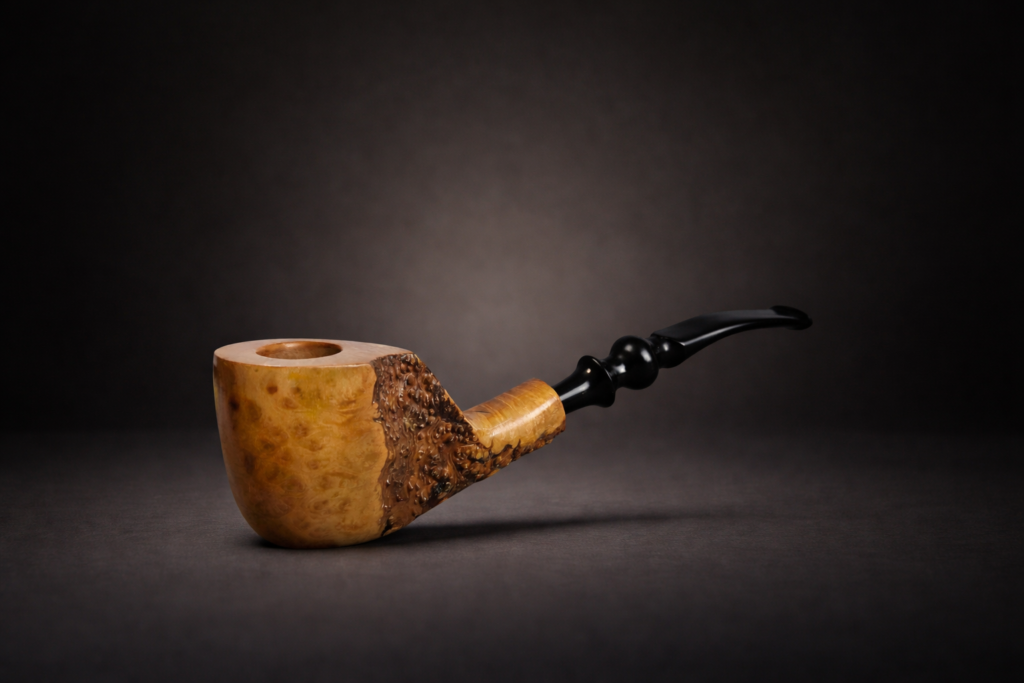
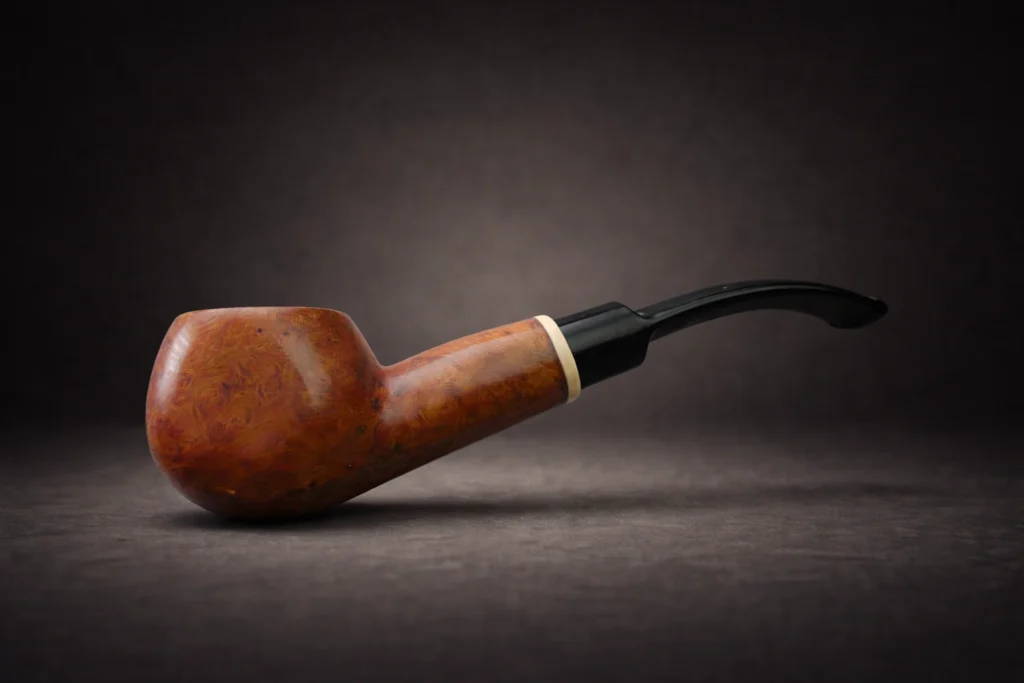
Some pipes look like little sculptures in photographs. The grain is gorgeous, the lines are graceful, the finish shines. Yet if the internal work was done carelessly, all that beauty quickly loses its shine in actual smoking. The pipe becomes an object to look at, not an object to live with.
This is not an attack on aesthetics. A good pipe can and should be beautiful. But beauty that does not serve function remains only a surface.
How to think more intelligently when buying
The next time you hear that a pipe “smokes well,” try to translate it. Does it mean that it has an open and orderly flow? That it does not collect unnecessary moisture? That it does not fight you every time you pack it? What exactly in its construction has earned that reputation?
The more precise you are in those questions, the less fog you will buy and the more real tool you will acquire. In a hobby built slowly, that is a very valuable change.
A good pipe is quietly honest on the inside
The most beautiful thing about good engineering is that it does not demand to be noticed all the time. Quite the opposite: when a pipe works as it should, you almost forget about it and your attention returns to what matters — the tobacco, the rhythm, the moment.
That may be the best definition of all. A good pipe is not the one you think about constantly. A good pipe is the one that allows you to think about everything else.