Clenching Without Strain: How to Tell Whether a Pipe Will Feel Comfortable Between the Teeth
Many beginners choose a pipe mainly with their eyes. They look at the shape, the color, the grain, perhaps the brand, and the general sense of character the pipe carries in a photograph. Only later do they discover that there is one much more grounded question which, in real smoking, can matter more than all of that: how the pipe actually sits between the teeth, and how comfortable it feels when you do not want to keep holding it in your hand. That is exactly why clenching is not a niche concern for obsessives but a practical question of daily use. This article does not search for one ideal shape or the “best” pipe for everyone. Its aim is more useful: to explain how weight, balance, stem length, and the general distribution of mass affect comfort, and how even before buying you can at least partly judge whether a pipe will feel natural between the teeth or quickly become a beautiful but tiring companion.
Why a beautiful pipe is not always a comfortable pipe
A beginner’s eye is almost always drawn first to what is most visible. The shape looks attractive or unattractive. The briar color inspires affection or indifference. The grain may appear luxurious, and the whole pipe may suggest elegance, seriousness, or character. All of that is understandable. The trouble is that none of those things by themselves tells you how the pipe will function once you actually begin smoking it.
This is where clenching becomes important very quickly. A pipe that looks excellent in photographs may feel entirely wrong when held between the teeth. It may be too heavy, poorly balanced, awkward in the stem, or simply built in a way that makes the bowl pull downward more than you expected. At that point, much of its visual charm begins to matter less.
That is why it helps to think of a pipe not only as something you admire, but as something you physically carry. In practice, comfort between the teeth often decides whether a pipe becomes a true companion or remains only a beautiful object that sees less use than you imagined.
What clenching comfort really means
Clenching comfort is not only about whether you can briefly hold a pipe in the mouth. It is about how naturally the pipe stays there without straining the jaw, dragging downward, or making the whole session feel like a minor physical task. A good clenching pipe does not have to disappear entirely, but it should not constantly remind you that it is there.
This matters because many beginners imagine clenching as a simple yes-or-no issue. In reality, there is a range. Some pipes are excellent for occasional hands-free moments while reading, walking, or doing something else. Others are tolerable for a few minutes but become tiring over the course of a longer smoke. Still others clearly ask to be held in the hand and do not pretend otherwise.
That is exactly what a smoker must learn to read. A pipe is not poor simply because it is not ideally hands-free. But if you expect to clench it often, comfort becomes a real criterion rather than a side note.
Why weight is not the whole story
Beginners often ask first how many grams a pipe weighs. That makes sense, but it helps only partly. Weight matters, but it is not the only thing that determines how a pipe feels between the teeth. Two pipes with similar mass can feel completely different if one has better balance, a wiser distribution of mass, and a more forgiving stem feel.
This is good news because it means a number alone is not fate. A slightly heavier pipe can feel easier than a lighter one if it does not drag aggressively forward. In the same way, a relatively light pipe can become tiring if all its weight seems to hang in the wrong place and constantly reminds the jaw where the bowl is.
That is why buying intelligently means moving beyond mass alone and beginning to think about where that mass lives. That is a far more useful way to judge clenching comfort.
Balance: the quiet king of comfort
If there is one quality that most strongly determines whether a pipe will feel good between the teeth, it is balance. Balance means how the mass is distributed between bowl, shank, and stem, and how naturally the whole pipe settles without constantly dragging downward or forward.
A pipe with good balance often feels lighter than it really is. Not because it deceives the scale, but because it does not punish the jaw. By contrast, a pipe with less happy balance can become tiring very quickly, even if its listed weight does not seem especially high. This is one reason certain shapes feel easier to carry than others before a smoker even knows how to explain it clearly.
In practice, good balance is never dramatic. It is quiet. It is that moment when a pipe between the teeth feels more natural than expected. And that quiet quality is often the most valuable of all.
The stem is not just the end of the pipe but the main point of contact
Beginners often treat the stem as a finishing detail. In reality, it is the main physical contact point between pipe and smoker. Its shape, thickness, length, and the way it sits between the teeth can completely change the feeling of clenching. Some pipes have stems that look elegant but are too thick or simply do not rest well in the bite. Others appear modest but feel far more comfortable in actual use.
This is where an important truth appears: clenching comfort is not only about the bowl but about the place where you truly carry the pipe. If the stem is uncomfortable, the rest of the construction cannot fully save the experience. That is why a good stem is not a luxury detail. It is a practical foundation for anyone who wants to hold a pipe without constantly using a hand.
How shape and length change the feeling in the mouth
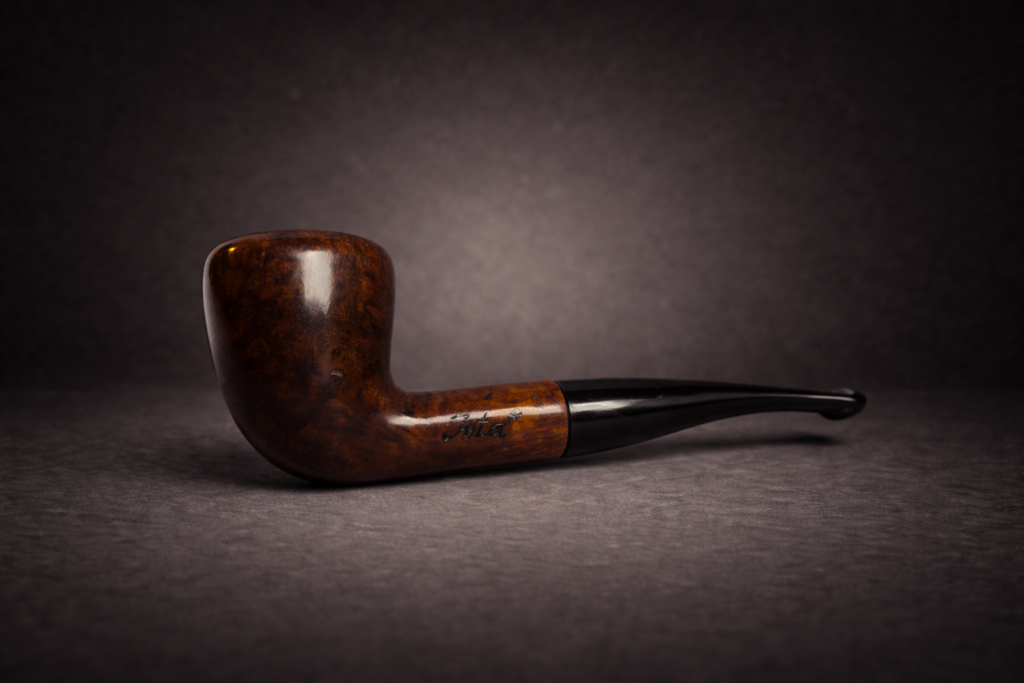
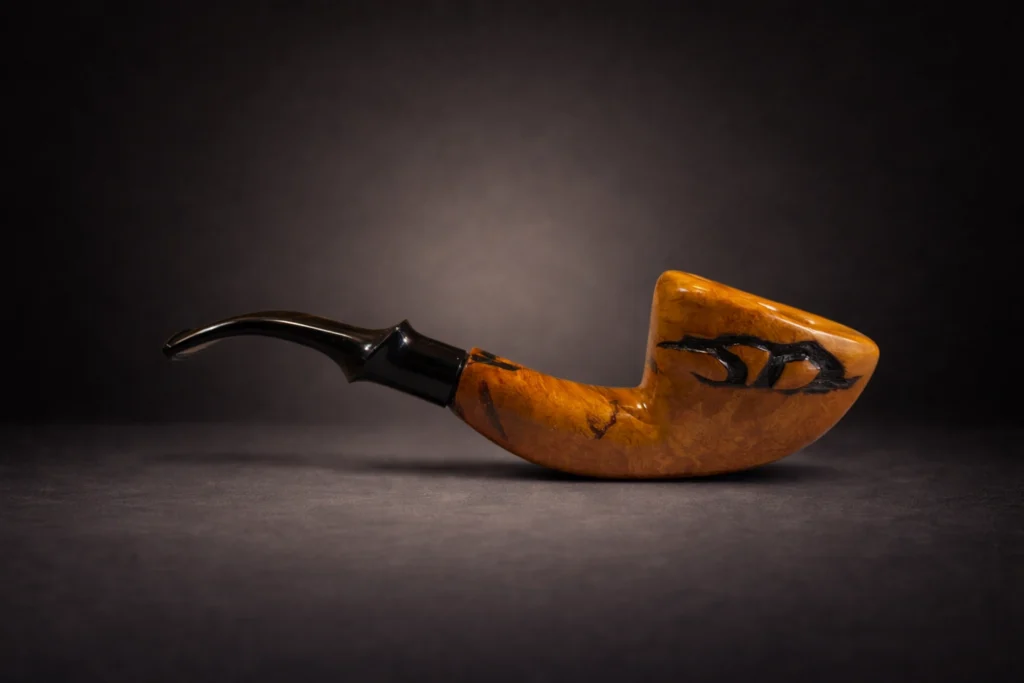
Not all shapes are equally friendly to clenching. That does not mean there is one universally best form, but it does mean that certain mass arrangements more often create an easier, more natural feeling. Bent pipes often help because the way the mass falls can work more kindly with the jaw. Yet even here, dogma fails: a poorly balanced bent can be worse to clench than a well-judged straight pipe.
Length matters as well. A longer pipe is not automatically uncomfortable, but it demands better balance and a more intelligent relationship between bowl and stem. Shorter pipes can feel practical, but they are no magical solution if the bowl still carries too much forward pull. Shape and length help in judgment, but they never decide alone.
How to judge before buying, even when you cannot hold the pipe
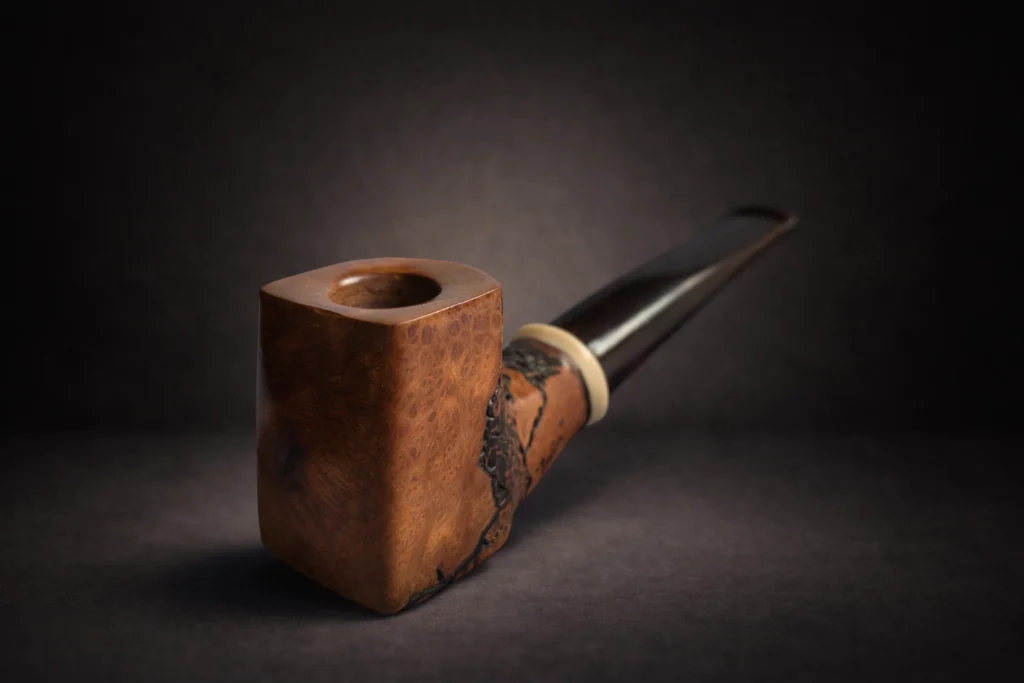
Ideally, every pipe would be held, tested, and felt. But that is not always possible, especially online. That is why a smoker should learn at least a rough method of judging. First, look at the relationship between bowl size and overall length. If the bowl appears very substantial compared to the rest of the pipe, that is a sign that clenching may not be its strongest quality. Then look at the stem: does it appear thinner and more refined, or thicker and heavier? That is not a final answer, but it is a clue.
It also helps to read specifications more carefully. If the weight is listed, consider it in relation to the shape rather than as an isolated number. If multiple photographs are available, watch how the pipe seems to stand and where the mass visually gathers. Even such rough judgment is better than buying purely for bowl beauty.
When to accept that a pipe is not meant for clenching—and that this is fine
It is also important to say something many beginners forget: not every pipe needs to be good for clenching. Some pipes are simply better held in the hand. That is not a flaw as long as you know it before buying or it does not trouble you in real use. The problem begins only when you expect one kind of comfort and receive another.
A more mature relationship to buying means knowing your priorities. If you want a pipe mainly for hand-held relaxation, clenching comfort may matter little. If you often read, type, walk, or do something else while smoking, it suddenly becomes central. The point is not that every pipe must do everything. The point is that you know what you want from the pipe you are choosing.
What is worth remembering in the end
Clenching comfort is not decided by weight alone. Balance, stem feel, and mass distribution often matter even more. A beautiful pipe can be tiring between the teeth, while a more modest-looking one can turn out to be the ideal companion precisely because it physically disappears in the right way.
This is one of the most useful insights a beginner can gain early. Once you start looking at a pipe not only as an object for the eyes but also as an object for the jaw, you buy more intelligently. And more intelligent buying very often means more real smoking and less admiration for a pipe that mostly remains on the rack.